What would you like to know about your plants?
32 guides. Sources last checked on .
Questions you can answer at the pot.
Pick a question. Each guide starts with a short answer, then explains what to check and what to write down.
- Indoor azalea care: Moist roots, no water left in the outer pot
Your azalea is covered in buds, yet the mix in that little pot already feels dry again. Give it a bright, cool spot, keep the root ball evenly moist and let excess water drain away. Low-mineral water matters too. This is not a plant to dry out like a cactus, but it should not sit in water either.
Sources checked on
- Indoor cyclamen care: Keep it cool and get watering right
The flower stems were upright yesterday; today they are flopping over the pot. Do not reach straight for the watering can. Indoor cyclamen need bright light, cool conditions and lightly moist rather than wet potting mix. Drooping stems can mean either too little or too much water. Feel the mix first.
Sources checked on
- Amaryllis care: From the first shoot to life after flowering
A green tip is pushing out of that large bulb. Does it need a full watering can already? Not yet. Give your amaryllis a bright, warm spot and keep the mix barely moist at first. As the shoot grows, it needs more water, but never a waterlogged outer pot. Keep the green leaves after flowering: they help replenish the bulb for another season.
Sources checked on
- Poinsettia care: Help it through the holidays
Your poinsettia is heading for the festive table, but that spot may be rather dark. Give it bright light away from cold draughts and direct heat. Water when the mix surface becomes dry, then let all excess drain away. Good care starts in the shop and on the journey home.
Sources checked on
- Pruning houseplants: What should you cut, and what should stay?
Your pothos is trailing along the floor, while another plant has a brown leaf tip. Those call for different cuts. Shorten healthy stems only when needed and in a way that suits the species, preferably during active growth. Dead leaves can go. On true palms, leave the growing crown alone.
Sources checked on
- What is on your houseplant – and what should you do first?
You spot sticky leaves or tiny moving dots while watering. Move the suspect plant away from the others, photograph what you found and take a closer look with a magnifier. Body shape, location and matching signs matter together. A yellow leaf alone is not a reason to reach for pesticide.
Sources checked on
- Windows, radiators and drafts: How warm is your plant’s actual spot?
The room feels comfortable, but the air beside the window feels chilly? The temperature around the plant matters more than the temperature by the sofa. Measure at its spot, keep leaves off cold glass and avoid blasts of hot or cold air. A slightly cooler evening is normal for many plants; abrupt changes and the species’ cold tolerance matter more.
Sources checked on
- Which potting mix is right for your houseplant?
Ten bags in the shop, all promising strong roots? Many common foliage plants do well in a good, suitably labelled peat-free houseplant mix. Drought-loving succulents and tree-growing orchids need different media. A long ingredient list matters less than a mix that holds some water, lets excess drain and leaves air around the roots.
Sources checked on
- Which water should you use for your houseplants?
Do you really need to buy special water for the watering can? Usually not: many houseplants grow well with ordinary tap water. Mineral-sensitive species and unsuitable local water may call for another source. The plant, your local supply and any household softener matter more than a promise that one water is perfect for every plant.
Sources checked on
- How to water houseplants: Let the pot decide, not the calendar
Your watering can is full, but does every plant actually need a drink? Feel beneath the surface and lift the nursery pot first. Wait until the mix is dry enough for that species, then water thoroughly and let the excess drain. A cactus can dry out more than a calathea, so one watering day rarely suits the whole collection.
Sources checked on
- How do you clean your houseplants’ leaves?
A grey film of dust on your rubber plant? Smooth, firm leaves usually need only a soft damp cloth. A gentle lukewarm rinse suits many plants with small, sturdy leaves. Brush fuzzy leaves carefully, and leave a natural powdery wax coating alone. Plain water is enough for most everyday cleaning.
Sources checked on
- How much humidity do your houseplants need?
Crispy leaf tips, and the spray bottle is already in your hand? Measure the humidity first. Around 40–50 percent is a useful starting point for many houseplants, but different species have different needs. If the air stays too dry, a better location and, when needed, a humidifier do more than occasional misting.
Sources checked on
- Christmas cactus not blooming? Take a look at its nights
Healthy green stems, but not a bud in sight? Evening lighting and constant warmth can hold back flowering in a Christmas cactus. Bright days, long uninterrupted nights and cooler temperatures help it get started. Once buds appear, steady conditions and the right amount of water matter.
Sources checked on
- Your houseplant is losing leaves – here’s what helps
Another leaf on the windowsill? An occasional older leaf is usually nothing to worry about if the plant otherwise looks healthy. If lots of leaves suddenly fall, look in the pot first: dry soil and persistent wetness need different responses. A new position, drafts or pests could also be involved.
Sources checked on
- Your Phalaenopsis has finished flowering – what next?
A moth orchid is not finished when its flowers fade. You can remove a fully brown, dry spike; decisions about a green spike depend on the plant type and condition. Healthy roots, enough light and appropriate temperatures matter more than a supposed flowering trick.
Sources checked on
- Root stem cuttings in water and move them into potting mix
For suitable houseplants, start with a healthy stem containing a growing node, clean water and a bright position away from strong direct sun. Move the cutting into an airy mix once it has enough roots, then support the transition with consistent moisture. A single leaf or a fixed date is not enough to judge success.
Sources checked on
- How to bring your houseplants indoors safely in autumn
Bring warmth-loving houseplants inside before they reach their individual cold limits, rather than waiting for the first frost. Prepare a suitable indoor position, inspect leaves and pots, and initially keep returning plants apart from your collection. Then adjust care to the new conditions.
Sources checked on
- How to set up a grow light for your houseplants
A grow light helps when enough useful light reaches the leaves. Choose it for the plants and area, set its distance and daily light period, then observe new growth. Wattage or visible colour alone cannot tell you whether the setup works.
Sources checked on
- Mold on potting mix: remove the growth and check the cause
Whitish fluff on the potting mix of an otherwise healthy houseplant often comes from fungi breaking down organic material. Gently remove a troublesome surface mat and check why the surface stays damp. Wilting leaves, soft stems or growth directly on the plant need closer investigation.
Sources checked on
- White fluff on your plant: how to deal with mealybugs
First separate a plant with confirmed mealybugs. Carefully remove visible insects and keep checking their hiding places. White residue alone does not establish infestation. This guide explains the first steps for mealybugs on leaves and stems and when further help is needed.
Sources checked on
- Thrips on houseplants: why one round is rarely enough
If you suspect thrips, separate the plant, look for living insects and wash sturdy plant parts. Protected life stages can survive one intervention, so further checks and suitable follow-up measures are needed. This guide helps with silvery leaf damage and recurring infestations.
Sources checked on
- Identify spider mites and bring an infestation under control
Separate the plant and check for spider mites using a magnifying lens and close leaf inspection. Gently remove confirmed mites and continue checking afterwards. Higher humidity alone will not clear an infestation.
Sources checked on
- Brown leaf tips: find the cause before watering more
Brown leaf tips are a symptom with several possible causes. First check moisture within the root ball, then review fertiliser, water quality and the plant's position. Dry heated air may contribute, but is not automatically to blame. Dead tissue will not turn green again; aim for stable foliage and healthy new growth.
Sources checked on
- Overwatered houseplant: what to do next
Do not immediately water a wilting plant whose root ball is already wet. Empty its outer pot and check that excess water can drain. If the soil stays wet and the plant deteriorates, inspect the roots. When rot is limited, healthy remaining tissue, fresh potting mix and adjusted care may offer a chance of recovery.
Sources checked on
- How often should you water a Monstera?
For a Monstera growing in potting mix, check the mix before watering rather than following a universal weekly rule. Let it approach dryness, then water thoroughly and allow excess water to drain. Hydroponic plants and newly rooted cuttings need a different approach.
Sources checked on
- Why does a houseplant develop yellow leaves?
Yellow leaves are a symptom, not a diagnosis. An occasional ageing lower leaf can be normal; widespread yellowing deserves a closer look. Start by recording the pattern, checking the pot, and reviewing recent changes rather than immediately adding water or fertilizer.
Sources checked on
- How do you look after plants while on holiday?
Plan for each plant, your time away, and the conditions at home. Check watering arrangements before you leave and give a helper clear instructions for the actual pots. Extra water is not a substitute for a working plan.
Sources checked on
- When and how should you repot a houseplant?
Inspect the roots and growing mix before deciding to repot. A crowded root ball may need more room; replacing tired mix may be enough in other cases. Prepare a suitable container with drainage and record what changed so you can review care afterwards.
Sources checked on
- When should you fertilize a houseplant?
Base feeding on the plant, its growth, and the product instructions. A due date is a prompt to check, not a reason to add fertilizer automatically. Review recent feeding and any nutrients already in the growing mix before making another application.
Sources checked on
- How do you find the right light for a houseplant?
Match the plant’s requirements to the light at its actual position. A room can feel bright while a shelf receives little daylight. Check the spot at different times, note direct sun, and compare what changes before moving the plant or adjusting care.
Sources checked on
- What can you do about fungus gnats in houseplants?
Start by checking the insect and the pot. Fungus gnats are associated with damp growing mix, but not every small fly is one. Review watering, monitor adults, and keep the plant’s moisture needs in view rather than drying every pot indiscriminately.
Sources checked on
- How should you care for houseplants in winter?
Review the actual winter location instead of carrying on with a summer routine. Check available light, pot moisture, and heating or drafts around the plant. Conditions differ between homes and species, so use those checks to decide what needs to change.
Sources checked on
How these guides are written.
- Sources first
- Advice comes from primary horticultural sources such as the RHS and university extension services. Each source is linked where it is used.
- Observation before action
- The guides ask you to check the pot, the light, and recent changes before you water, feed, or treat a symptom.
- No diagnosis from afar
- When a cause stays unclear, the guides point you to a qualified local adviser. Your photos and notes make that conversation easier.
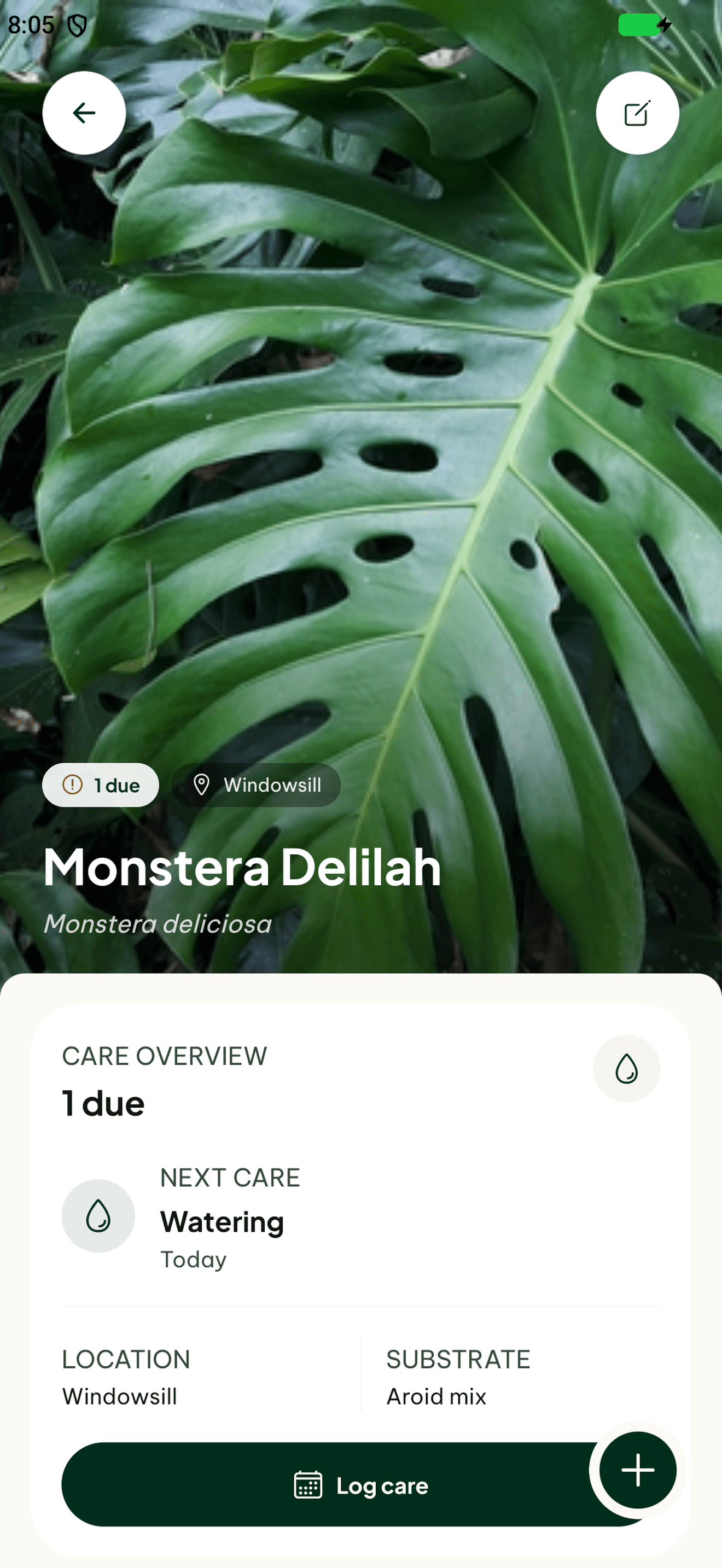

Read it here. Record it in the app.
The guides keep asking you to write things down: when you checked the pot, what changed, what you tried. In Plantly, those notes, photos, and care tasks stay with each plant.
See how Plantly keeps a plant’s historyMake room for more green.
Your plants, your favourite companion, and a little routine to look forward to. All in Plantly.
Free to start. Optional Premium. iPhone version coming soon.