How to bring your houseplants indoors safely in autumn
In short
Bring warmth-loving houseplants inside before they reach their individual cold limits, rather than waiting for the first frost. Prepare a suitable indoor position, inspect leaves and pots, and initially keep returning plants apart from your collection. Then adjust care to the new conditions.
In this guide
1. Use night temperatures and species requirements
Check the overnight forecast and species; a warm afternoon says little about the night. Tropical plants may be sensitive well above freezing.
For outdoor conditions, the RHS gives examples of above 13 °C for philodendrons and at least 15 °C for calatheas and marantas. These are guidelines, not survival guarantees. If cold threatens, bringing plants inside takes priority over completing acclimatisation.
Source: Royal Horticultural Society: Moving Houseplants Outdoors for Summer
2. Prepare an appropriate indoor position
Check light, space and temperature in the intended winter location. Frost-free does not necessarily mean warm enough for tropical foliage plants. Equally, a heated living room does not suit every outdoor container plant.
Distinguish warm indoor positions from cooler quarters for suitable species. Plan a suitable bright place for separate initial observation too. A dark cupboard does not suit leafy houseplants.
Source: Royal Horticultural Society: Overwintering Plants in Conservatories
3. Introduce lower light gradually when possible
If temperatures allow, move the plant into increasingly shaded, sheltered positions over roughly a week. This eases the change to lower indoor light.
Choose a bright, species-appropriate position inside. If a sudden cold spell arrives, bring the plant in immediately. Then keep conditions reasonably stable instead of frequently moving it between very different locations.
Source: Clemson Cooperative Extension: Moving Houseplants Indoors & Outdoors
4. Inspect leaves, shoots and the pot thoroughly
Inspect leaf undersides, leaf joints, shoots, pot rims, saucers and visible potting mix. Look for pests, webbing, sticky areas, white deposits or shield-like bumps.
Remove dead material and clean containers. Gently rinse sturdy foliage and let it dry; delicate species need appropriate alternatives. Identify pests you find rather than automatically treating every plant with the same product.
Source: University of Illinois Extension: Bring Houseplants Indoors Before the First Frost
5. Keep returning plants separate at first
Small pests or hidden life stages may escape the first inspection. Where possible, keep returning plants separate for three to four weeks and check repeatedly.
Avoid direct leaf contact; a separate bright room helps. If suspicious signs appear, keep the plant isolated until the cause and treatment result are clear. Check neighbours that have already been in contact if necessary.
Source: Iowa State University: How and When Do I Bring My Houseplants Back Indoors Before Winter?
6. Do not keep the summer routine unchanged
Light, temperature and humidity change indoors. Check the root ball before watering and observe how quickly the pot now dries. Remove excess water after watering.
Base feeding on growth and species: many plants need less, while particular actively growing or winter-flowering plants need different care. More fertiliser cannot replace light. Consider dry heated air for sensitive plants too.
7. Understand leaf drop without overlooking warning signs
Yellowing or falling leaves can be part of adjustment after a move. If other leaves stay stable and there are no further problems, consistent, suitable conditions help.
Investigate increasing leaf loss, persistently wet roots, soft tissue or visible pests. Not every problem is normal acclimatisation. A photograph from moving day helps distinguish existing damage from new changes.
Source: Iowa State University: Several Houseplants Brought Indoors in Fall Are Dropping Leaves. Why?
8. Do not automatically add a complete overhaul
Do not repot a healthy plant just because autumn has arrived. Check whether crowded roots, unsuitable growing medium or a specific infestation justify disturbance.
Remove dead material and prune only as health or space requires. Keep tools and pots clean. A serious root problem needs prompt assessment; it should not wait until spring simply because the season has changed.
Your checklist
Tick off what you have already checked. Nothing is saved.
Frequently asked questions
Can I wait for the first frost?
Not with warmth-loving houseplants. Use their minimum temperature and the overnight forecast.
Is three to four weeks apart enough?
It is an observation period, not a guarantee. Keep plants separate if signs of infestation appear.
Must I always repot when bringing plants in?
No. Inspection and cleaning often suffice. Roots, growing medium or a specific infestation determine further action.
Record the move into winter quarters
Create a Plantly journal entry with the move date, new position and a photograph. Add unusual leaf changes or any pests found during subsequent checks. The dated photos help you compare changes after the move and distinguish existing damage from new problems.
Explore the related Plantly feature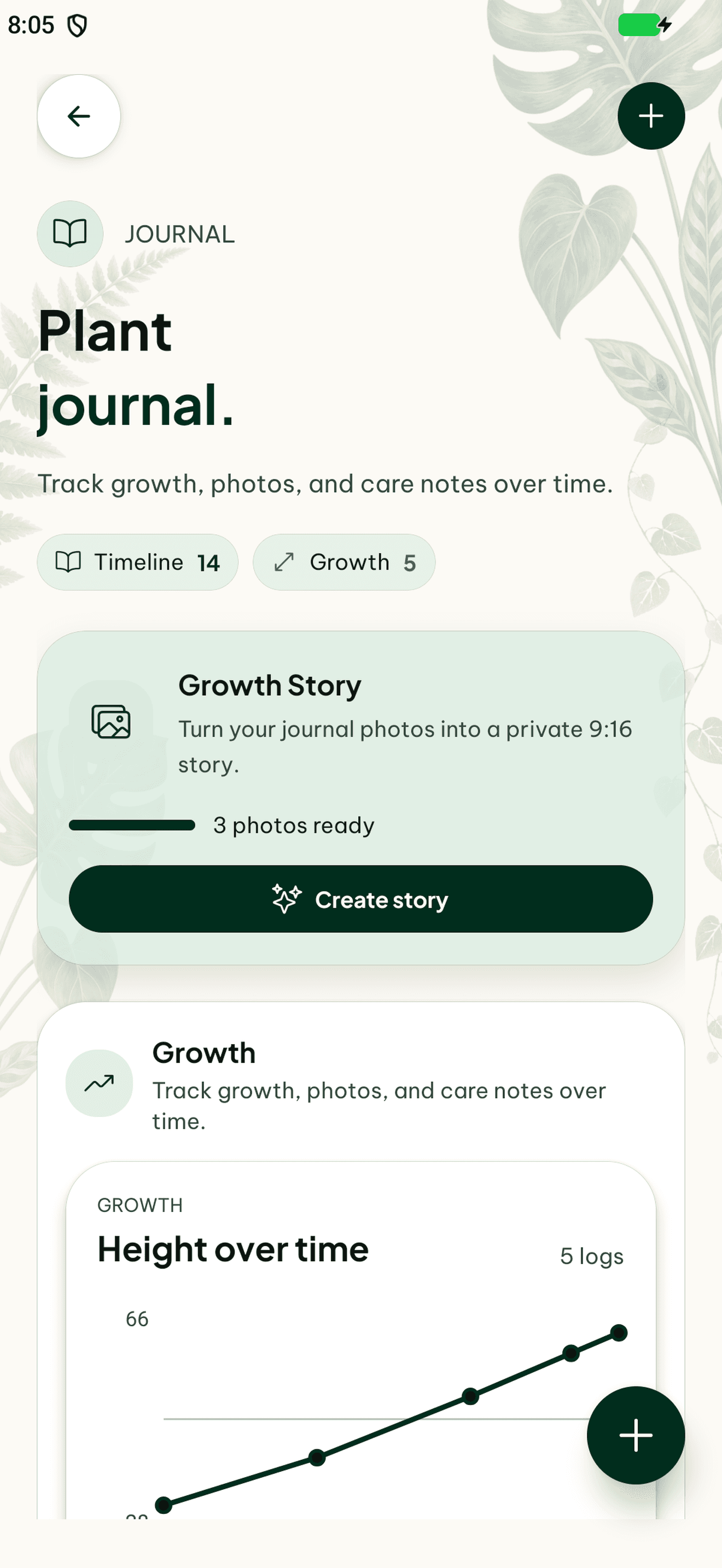

Sources
- Royal Horticultural Society: Moving Houseplants Outdoors for Summerrhs.org.uk
- Royal Horticultural Society: Overwintering Plants in Conservatoriesrhs.org.uk
- Clemson Cooperative Extension: Moving Houseplants Indoors & Outdoorshgic.clemson.edu
- University of Illinois Extension: Bring Houseplants Indoors Before the First Frostextension.illinois.edu
- Iowa State University: How and When Do I Bring My Houseplants Back Indoors Before Winter?yardandgarden.extension.iastate.edu
- Chicago Botanic Garden: Indoor Plant Carechicagobotanic.org
- Iowa State University: Several Houseplants Brought Indoors in Fall Are Dropping Leaves. Why?yardandgarden.extension.iastate.edu
- New York Botanical Garden: At What Temperature Should I Bring Potted Tropical Plants Indoors for the Winter?libanswers.nybg.org
Checked on 22 October 2026. This guide does not replace advice for your individual plant.