How to water houseplants: Let the pot decide, not the calendar
In short
Your watering can is full, but does every plant actually need a drink? Feel beneath the surface and lift the nursery pot first. Wait until the mix is dry enough for that species, then water thoroughly and let the excess drain. A cactus can dry out more than a calathea, so one watering day rarely suits the whole collection.
In this guide
“Let it dry” means different things for different plants
Start with your species’ moisture needs. Some houseplants prefer consistently lightly moist mix; others need a much drier interval. This guide covers established plants in potting mix with drainage holes, not water-rooted cuttings or hydroponic setups.
A calathea should not dry out completely, while many drought-adapted succulents need the root ball to dry between waterings. “A small splash every week” misses those differences.
Dry on top, still damp below?
Feel a few centimetres below the surface, as far as the pot and roots allow. Does moist mix still cling to your finger? Lift the pot too. You will get to know how it feels just after watering and when it is much lighter.
A dry surface tells you little about the whole root ball. Large or deep pots retain moisture lower down. If the mix is wetter than this species needs, wait. Drooping leaves alone are not a signal to water: damaged roots in wet mix can cause them too.
Source: University of Maryland Extension: Watering indoor plants
When water is needed, wet the whole root ball
Remove the nursery pot from its decorative outer pot and move it to a sink if helpful. Pour room-temperature water slowly over the mix, spreading it across the surface. Aim for evenly moist mix with excess water draining from the bottom.
Let the pot finish dripping before putting it back, and empty its saucer. Frequent tiny splashes may leave part of the root ball dry. Continually wet mix is not a useful reserve for every plant either.
Source: University of Wisconsin–Madison Extension: Houseplant care
Bottom watering works, but do not leave the pot soaking
Stand a pot with drainage holes in a bowl of water. Let the mix draw water upwards, then assess whether moisture has reached the root ball. A heavier pot and a surface becoming moist help you judge. Remove the pot and let it drain.
The aim is not to leave it sitting there. Bottom watering also does not flush accumulated salts out of the pot. For healthy plants in suitable mix, water from above with free drainage occasionally. Use fresh water for different plants where possible rather than sharing a soaking bath.
Source: Mississippi State University Extension: Care and selection of indoor plants
Water runs straight through, but the pot stays light
Very dry potting mix can repel water. Water slips between the root ball and the pot without wetting much of the middle. Apply it slowly in several rounds and feel the mix again afterwards. Fast runoff alone does not prove watering has worked.
If the pot stays wet for a long time without more watering, look at drainage, pot size and roots instead. For drooping leaves in wet mix, see our guide to overwatering and root rot.
Source: Virginia Cooperative Extension: Properly watering container houseplants
A different spot can change the rhythm
Light, warmth, humidity, pot material and mix all affect drying. Terracotta loses moisture through its walls; plastic does not. Reassess after moving a plant closer to a window or repotting it. For a species-specific example, see watering a monstera.
A water reservoir is a different system
A purpose-built self-watering pot supplies moisture from a reservoir through a wick or similar arrangement. That is different from water left accidentally in a decorative pot. Follow the system’s instructions and choose it to suit the species. Do not transfer the finger test and drying intervals unchanged to semi-hydroponic or hydroponic growing.
Source: Virginia Cooperative Extension: Properly watering container houseplants
Your checklist
Tick off what you have already checked. Nothing is saved.
Frequently asked questions
How many millilitres does my plant need?
One number cannot suit different root balls and containers. In a standard pot with drainage, apply enough to wet the mix evenly and allow excess water to escape.
Can I just water carefully in a pot without a hole?
For ordinary houseplant growing, a nursery pot with drainage holes is a safer choice. Gravel does not replace a drainage hole. Keep the decorative container as an outer pot.
Are moisture meters more reliable than my finger?
Not automatically. Readings depend on the mix and how the device is used. Treat them as another clue alongside pot weight and the condition of the mix.
A reminder to look first, not water automatically
In Plantly, log watering you have actually done or give feedback when a task is too early or not needed. A reminder does not measure moisture in the pot.
Explore the related Plantly feature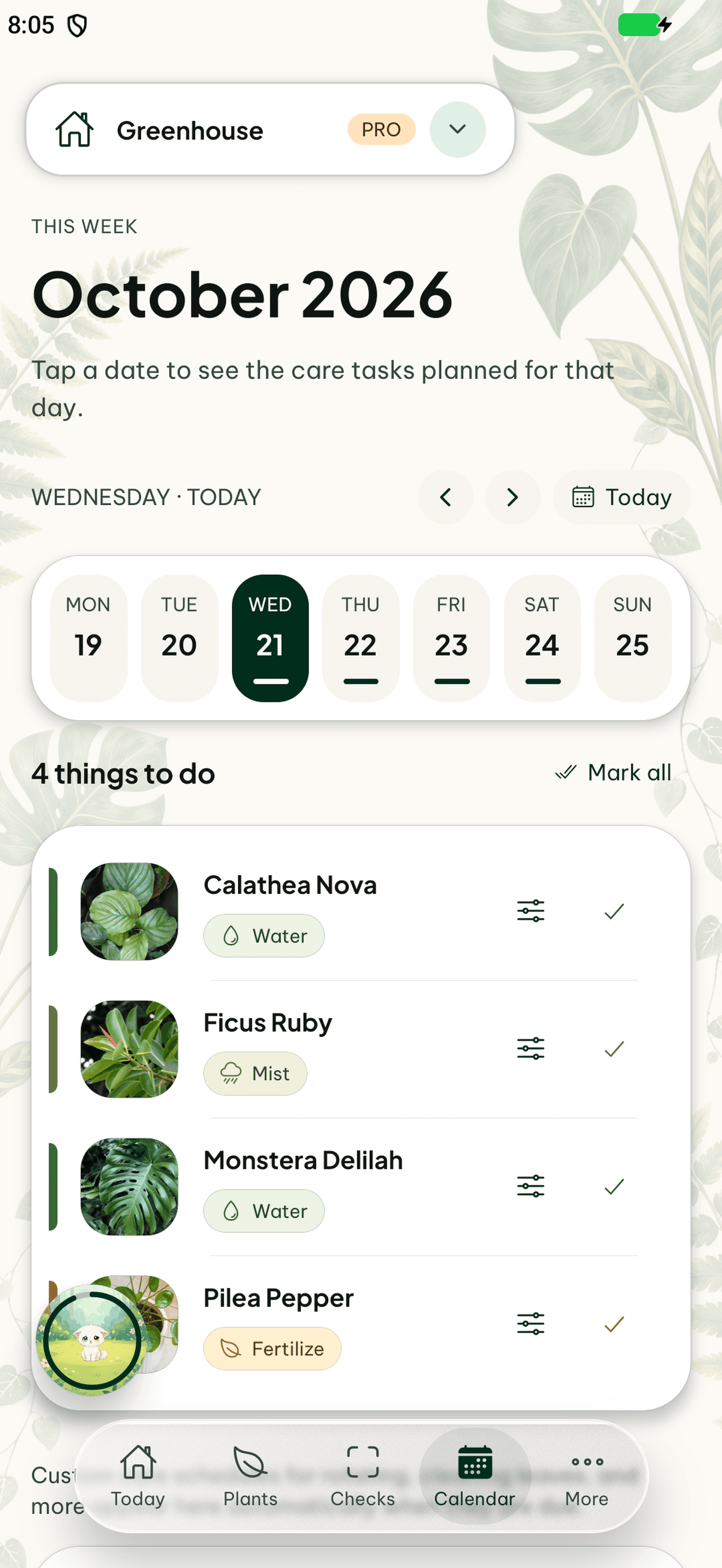
Sources
- Illinois Extension: Watering houseplantsextension.illinois.edu
- University of Maryland Extension: Watering indoor plantsextension.umd.edu
- University of Wisconsin–Madison Extension: Houseplant carehort.extension.wisc.edu
- Mississippi State University Extension: Care and selection of indoor plantsextension.msstate.edu
- Virginia Cooperative Extension: Properly watering container houseplantspubs.ext.vt.edu
Checked on 23 October 2026. This guide does not replace advice for your individual plant.