When and how should you repot a houseplant?
In short
Inspect the roots and growing mix before deciding to repot. A crowded root ball may need more room; replacing tired mix may be enough in other cases. Prepare a suitable container with drainage and record what changed so you can review care afterwards.
In this guide
Check whether the plant needs more room
Roots at drainage holes, a root-filled pot, or unusually small new leaves are reasons to inspect the setup. Illinois Extension recommends repotting during active growth, often in spring or early summer. Species differ: a calendar anniversary alone is not a reason to move every plant.
Source: Illinois Extension: Repotting
Choose drainage and a modest increase in size
Prepare a clean pot with drainage holes and avoid a large jump in size. Illinois Extension warns that an oversized volume of mix can stay too wet. A layer of gravel at the bottom does not replace drainage. Check how the inner pot and decorative outer pot fit together.
Match the growing mix to the plant
Choose a mix suited to the species and its growing method. Maryland Extension distinguishes ordinary houseplant mixes from specialist orchid and succulent mixes. Check moisture before the next watering rather than repeating the old interval.
Source: University of Maryland Extension: Potting and repotting indoor plants
Move the plant gently into the prepared pot
Ease the plant from the old container and support the root ball. Gently loosen crowded outer roots, following the needs of the species. Illinois Extension describes partially filling the new pot, holding the plant centrally, adding mix around it, and pressing lightly. Leave space for watering, water the mix, and allow it to drain.
Source: Illinois Extension: Repotting houseplants step by step
Give the new setup a clear starting record
Before starting, take a photo of the plant and note why you are repotting. Add the date, old and new pot sizes, the mix used, and whether it contains feed. Keep a photo of the product label if it explains how long that feed lasts.
At the next care check, write down what you actually found instead of marking a watering task complete automatically. Keep an observation such as “new mix still damp, watering postponed” separate from completed care. This makes the change understandable to someone else caring for the same plant.
Your checklist
Tick off what you have already checked. Nothing is saved.
Frequently asked questions
Does every houseplant need repotting once a year?
No. Growth and the current setup matter. Inspect the roots and mix rather than applying the same yearly deadline to every plant.
Is a much bigger pot always better?
No. An oversized pot can hold more wet mix than the plant can use. Choose a suitable size and drainage rather than the largest available container.
Keep repotting with the care history
Plantly includes repotting among its five care types. Record the completed task and keep photos and notes about the new setup in the journal. Review upcoming watering against the actual pot conditions.
Explore the related Plantly feature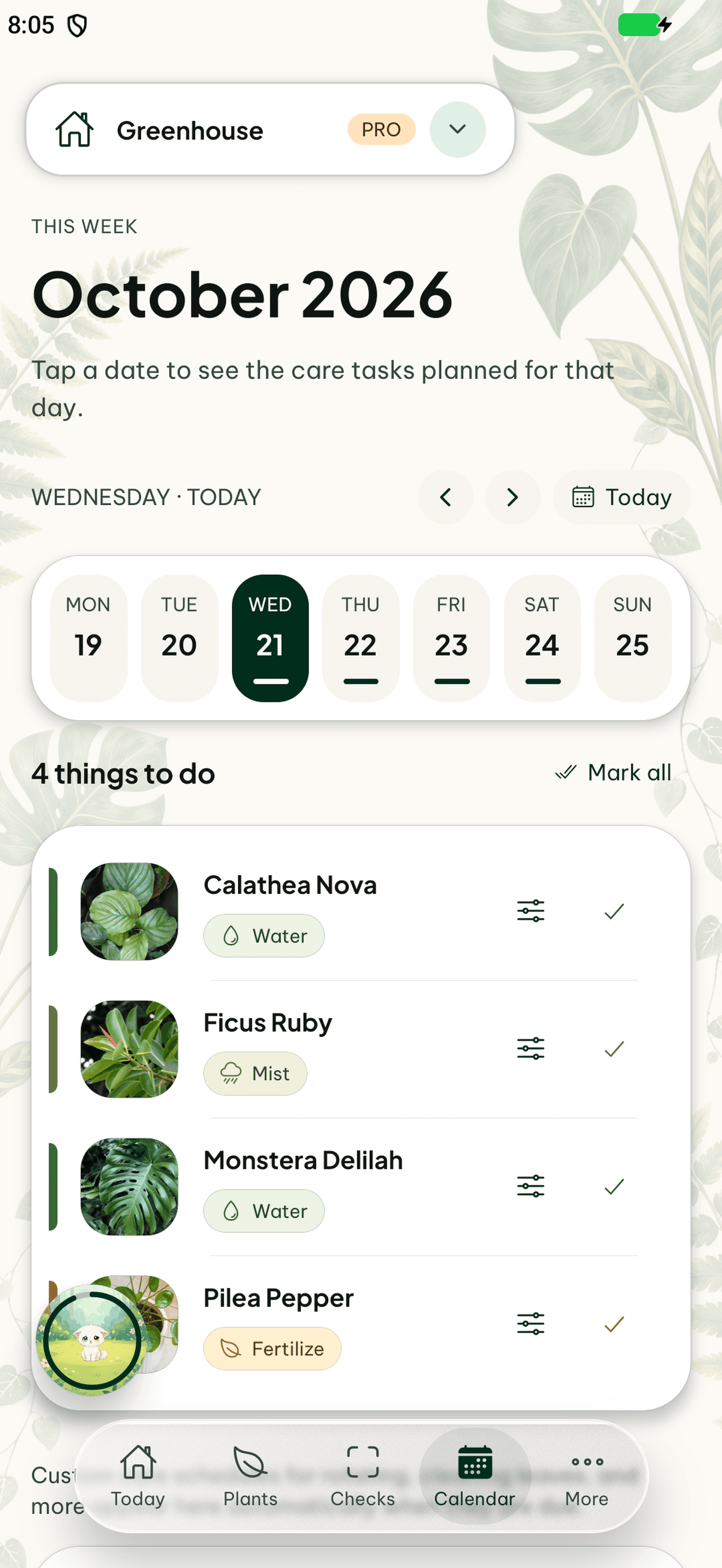

Sources
- Illinois Extension: Repottingextension.illinois.edu
- Illinois Extension: Tips for repotting houseplantsextension.illinois.edu
- University of Maryland Extension: Potting and repotting indoor plantsextension.umd.edu
- Illinois Extension: Repotting houseplants step by stepextension.illinois.edu
Checked on 12 October 2026. This guide does not replace advice for your individual plant.