Indoor azalea care: Moist roots, no water left in the outer pot
In short
Your azalea is covered in buds, yet the mix in that little pot already feels dry again. Give it a bright, cool spot, keep the root ball evenly moist and let excess water drain away. Low-mineral water matters too. This is not a plant to dry out like a cactus, but it should not sit in water either.
In this guide
An indoor azalea is not the same as a hardy garden azalea
This guide covers azaleas sold in bloom for indoor display, usually cultivars and hybrids of Rhododendron simsii. Growers bring them into flower early for Christmas sales. A pot full of flowers does not make them hardy outdoor decorations.
Read the label before moving a finished plant into the garden. An indoor azalea needs frost-free conditions in winter; the hardiness of other azaleas does not apply to it.
Source: Royal Horticultural Society: Christmas-flowering houseplants
Choose a cool window rather than a warm dining table
A bright spot without strong direct sun on the flowers works well. Around 15–18°C (59–64°F) is a useful starting point, not a strict cutoff. Flowers generally last longer in a cooler room than in a warm living room. Keep the pot out of hot air from radiators or heating vents.
If you are unsure, measure the temperature right beside the plant. Our temperature and drafts guide helps you assess the spot. Dry heating air calls for a better location, not water left beneath the pot. For practical room-climate options, see humidity for houseplants.
Source: Illinois Extension: Think Green Plants This Valentine's Day – Azaleas
Feel the mix daily at first, but do not water automatically
After bringing the plant home, feel the mix each day while you get to know the pot. If the surface is still damp, it does not need more water yet. When it begins to feel dry, take the inner pot out of its decorative cover and water the mix slowly until water runs from the drainage holes. Do not wait for the entire root ball to dry out.
Let it drain thoroughly and empty the outer pot. Water belongs in the root ball, not in a permanent puddle underneath. Our houseplant watering guide walks you through the technique.
Source: Iowa State University Extension: Caring for a flowering azalea
Drooping leaves: Dry root ball or wet roots?
If the root ball has dried badly, give the inner pot a brief soak in a container of lukewarm water. Once air bubbles stop rising, lift it out and let it drain. This re-wets the mix; it is not a permanent soaking arrangement.
If the mix is wet, do not add more water. Empty any standing water. If yellowing or wilting keeps spreading, examine the roots: Soft, decaying roots are a warning sign. Our root rot guide explains what to do next. Leaf drop alone does not distinguish thirst from damaged roots.
Source: University of Illinois Extension: Azaleas – leaf drop and watering
Low-mineral water makes a difference
Use cleanly collected rainwater where possible. If your tap water is hard, additive-free distilled or deionized water is an alternative. Hard water can raise the mix's pH – a measure of how acidic it is – and make nutrients less available. Our guide to choosing water for houseplants helps you choose a suitable source.
Source: Royal Horticultural Society: Collecting, storing and reusing water
New leaves are yellow but the veins stay green?
This pattern can point to an iron-uptake problem. In azaleas, an overly high pH can stop roots taking up iron that is already present. The pattern is a clue, not a diagnosis: Watering and root problems can also resemble nutrient deficiencies.
Look at the root ball, water source and potting mix before adding more fertilizer. When repotting is actually needed, choose a peat-free mix labeled for azaleas or rhododendrons, often called ericaceous compost, rather than any general houseplant mix. Our potting mix guide explains these differences.
After the flowers, you still have a small shrub
Remove faded flowers. Shorten long shoots lightly after flowering, without cutting hard into old wood. Repot only when needed. Once new growth starts, consider a modest feed, following the label and allowing for fertilizer already in the mix.
Keep the roots moist. After frost risk has passed, gradually introduce the plant to a bright, partly shaded outdoor summer spot. Bring it back under cover before frost.
Keep it away from pets and young children
Azaleas are toxic to cats and dogs. Pick up fallen flowers and leaves where animals might chew them. If a pet eats any part, seek veterinary advice promptly.
The plant is not food for people either. If a child swallows plant material, contact a poison center or medical professional for advice. The National Capital Poison Center explains the risks; general reassurance cannot replace advice about an individual exposure.
Source: ASPCA Poison Control: Azalea
Your checklist
Tick off what you have already checked. Nothing is saved.
Frequently asked questions
Will my azalea flower again next Christmas?
There is no reliable promise. Repeat flowering is challenging indoors and may be later or less abundant. You can keep growing the plant, but a fixed Christmas deadline is not a dependable goal.
Can I use water from a household softener?
Not as a long-term choice if the system replaces calcium and magnesium with sodium. That is different from low-mineral water. Choose clean rainwater or suitable purified water instead.
Should I mist the open flowers?
No. The RHS advises against misting once the buds show color. Focus instead on a cool location that does not dry the plant out, and on moisture in the root ball.
Use a reminder as a prompt to feel the mix
Plantly's care reminders can prompt you to look at the mix. If watering is too early, give that feedback; log only care you have actually carried out. A reminder does not measure moisture or replace a quick look between reminders when a small pot dries fast.
Explore the related Plantly feature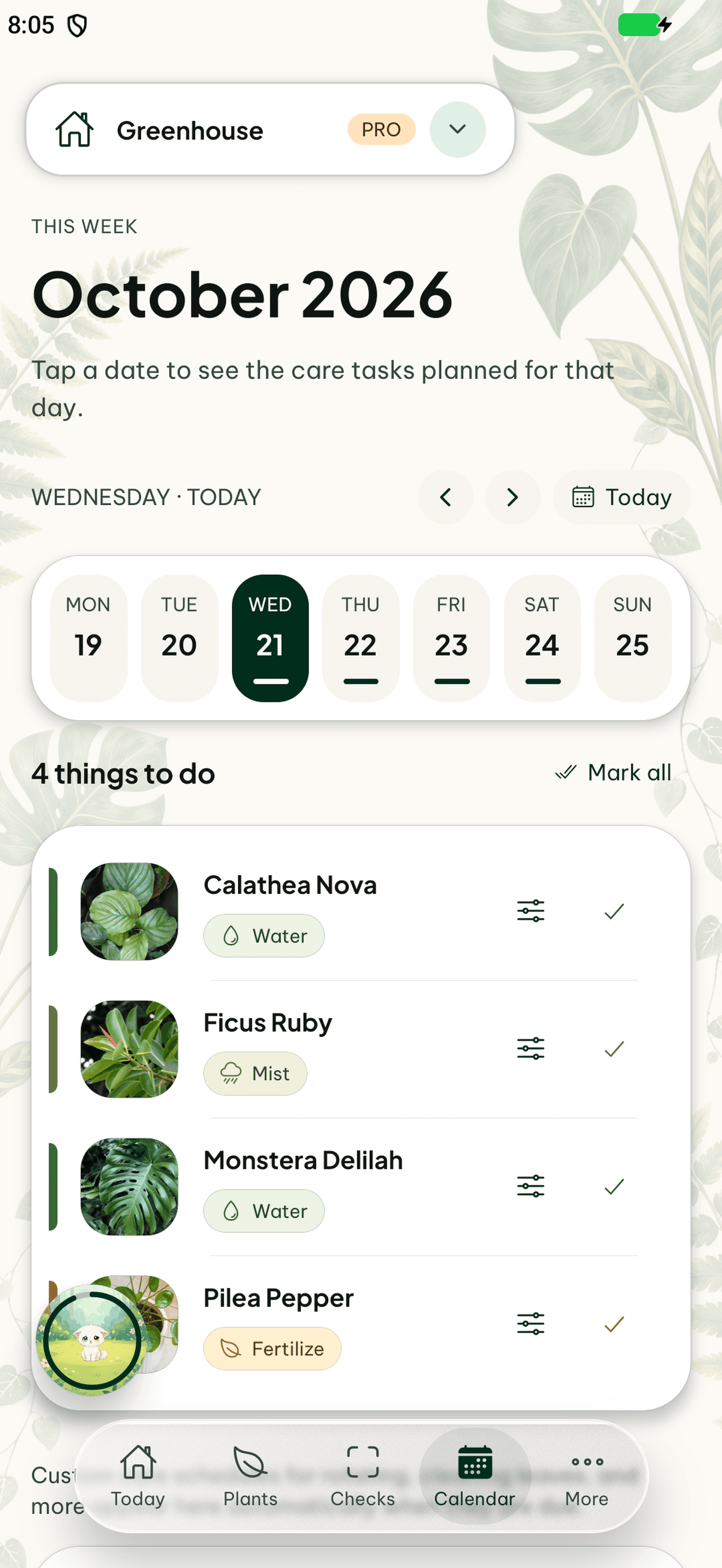

Sources
- Royal Horticultural Society: Christmas-flowering houseplantsrhs.org.uk
- Illinois Extension: Think Green Plants This Valentine's Day – Azaleasextension.illinois.edu
- Iowa State University Extension: Caring for a flowering azaleayardandgarden.extension.iastate.edu
- University of Illinois Extension: Azaleas – leaf drop and wateringweb.extension.illinois.edu
- Royal Horticultural Society: Collecting, storing and reusing waterrhs.org.uk
- Royal Horticultural Society: Nutrient deficienciesrhs.org.uk
- Royal Horticultural Society: Azaleas indoorsrhs.org.uk
- ASPCA Poison Control: Azaleaaspca.org
Checked on 29 October 2026. This guide does not replace advice for your individual plant.