Which water should you use for your houseplants?
In short
Do you really need to buy special water for the watering can? Usually not: many houseplants grow well with ordinary tap water. Mineral-sensitive species and unsuitable local water may call for another source. The plant, your local supply and any household softener matter more than a promise that one water is perfect for every plant.
In this guide
Tap water is a sensible starting point for many plants
If your ordinary foliage plants are growing well, you do not need to switch them to specialist water as a precaution. Let very cold water come to around room temperature before using it.
If you are unsure, ask your supplier for a water-quality report. Look at hardness and the listed constituents. If your home has a treatment system, consider what reaches the tap after treatment too. A white crust alone does not identify which substance might be causing trouble.
Source: Iowa State University Extension: How to care for houseplants
Hard water is not automatically bad water
Hardness mainly reflects dissolved calcium and magnesium. Repeated watering with hard water can raise the pH of the mix, which describes how acidic or alkaline it is. Acid-loving plants such as azaleas are more sensitive to this than many adaptable foliage plants.
Yellow leaves with green veins can fit a nutrient-uptake problem, but do not prove limescale is to blame. Root problems are another possibility. Our guide to yellow leaves helps you investigate.
Source: Royal Horticultural Society: How to grow houseplants
Softened water is not the same as low-mineral water
A conventional household softener replaces calcium and magnesium with sodium. Fewer limescale marks do not automatically make that water better for plants. Sodium can build up in the pot with continued use.
For regular watering, choose water from before that type of softener or another suitable source. Used softened water once by mistake? That does not automatically mean harm. Change the source rather than soaking the plant unnecessarily with a precautionary flush.
Source: Penn State University: Softened water and indoor plants
When rainwater or purified water makes sense
Cleanly collected rainwater is usually low in minerals and useful for many lime-sensitive plants. Keep collection surfaces and containers clean, cover stored water and do not use water that smells foul.
Additive-free distilled or deionized water is another option when you specifically need low-mineral water. Ordinary foliage plants still need appropriate nutrition, but that is not a reason to give every plant extra fertilizer: carnivorous plants and other specialists follow different rules.
Source: Royal Horticultural Society: Collecting, storing and reusing water
Leaving water overnight does not turn it into rainwater
Standing water warms to room temperature. Free chlorine can dissipate over time, but chloramine cannot be removed this way. Ask your local supplier which, if either, it uses. Advice about US water treatment does not automatically describe the tap in your own home.
A jug filter does not remove every substance either. The US Environmental Protection Agency notes, for example, that ordinary activated-carbon filters and boiling do not remove fluoride. Choose treatment by the substance you want to reduce and the product’s verified performance, not simply the word “filtered”.
Source: CDC: Water disinfection with chlorine and chloramine
Make the choice for a reason
Adaptable plant, healthy growth and no sodium-softened supply? Start with tap water. A known lime-sensitive plant and hard tap water? Clean rainwater or suitable purified water is a more useful choice.
If brown tips or deposits persist, consider watering technique and fertilizer as well. Avoid changing everything at once and give new leaves time to show the result. Our brown leaf tip guide helps narrow things down; see fertilizing houseplants for nutrition.
Source: Iowa State University Extension: How to care for houseplants
Your checklist
Tick off what you have already checked. Nothing is saved.
Frequently asked questions
Does a calathea always need distilled water?
Not necessarily. Local water quality matters. For sensitive plants with unsuitable tap water, a low-mineral source is useful, but it does not replace suitable mix, air conditions or watering amounts.
Is bottled mineral water better?
Not automatically. It may contain plenty of dissolved minerals. The composition matters more than whether water comes from a bottle or a tap.
Can I add vinegar or lemon juice?
Not on guesswork. Uncontrolled acidification can shift pH too far. For routine care at home, choosing a suitable water source is a more straightforward option.
Keep the water source with the plant
Note the water you use in Plantly’s plant journal and add a date if you change sources. Photos of new leaves make later comparisons easier. The app does not analyze water quality.
Explore the related Plantly feature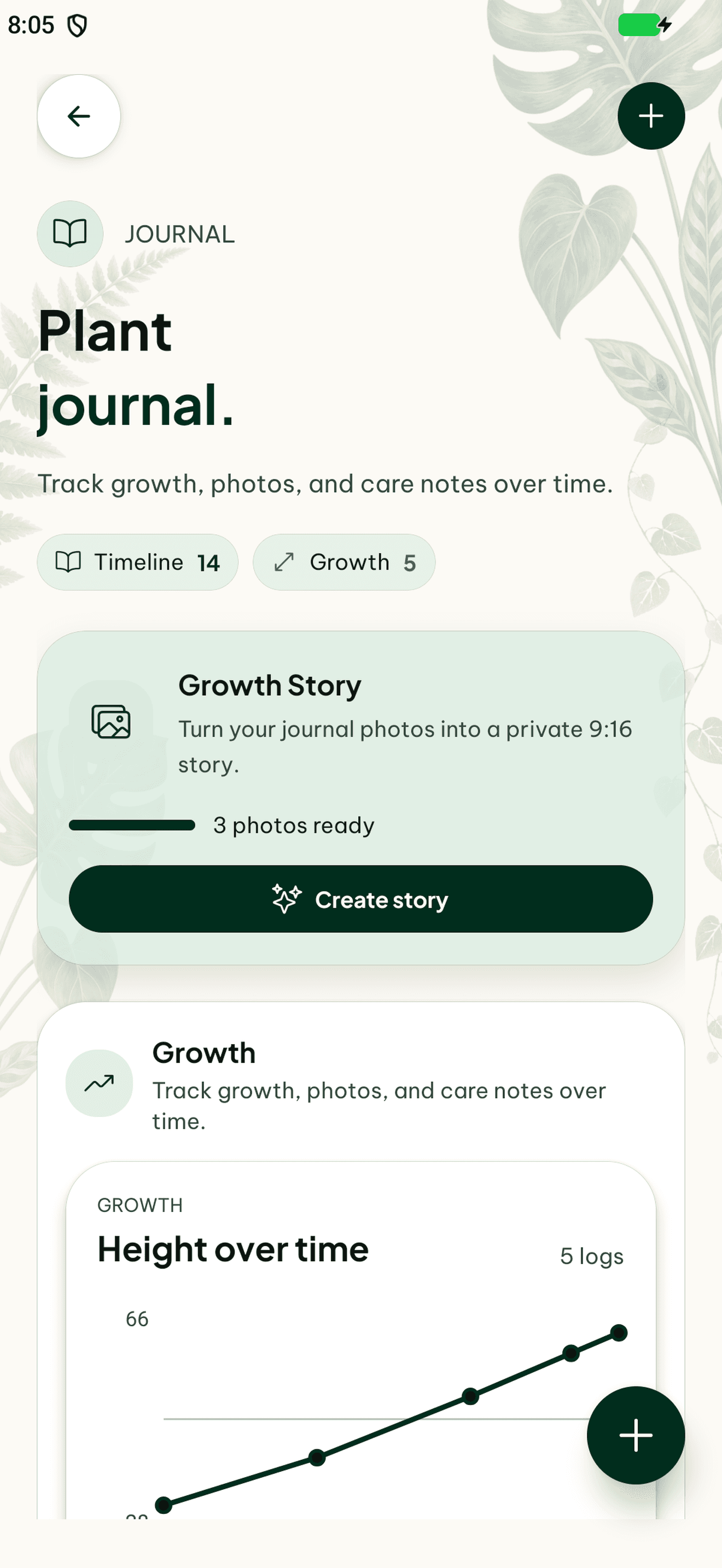

Sources
- Iowa State University Extension: How to care for houseplantsyardandgarden.extension.iastate.edu
- Royal Horticultural Society: How to grow houseplantsrhs.org.uk
- Penn State University: Softened water and indoor plantspsu.edu
- Royal Horticultural Society: Collecting, storing and reusing waterrhs.org.uk
- CDC: Water disinfection with chlorine and chloraminecdc.gov
Checked on 23 October 2026. This guide does not replace advice for your individual plant.