Overwatered houseplant: what to do next
In short
Do not immediately water a wilting plant whose root ball is already wet. Empty its outer pot and check that excess water can drain. If the soil stays wet and the plant deteriorates, inspect the roots. When rot is limited, healthy remaining tissue, fresh potting mix and adjusted care may offer a chance of recovery.
In this guide
Put wet soil and wilting leaves in context
Drooping leaves do not automatically mean thirst. Damaged roots may fail to supply leaves even in wet soil. Check moisture beneath the surface and the pot’s weight before watering.
One thorough watering does not prove root rot. Persistent wetness matters. Record the last watering and observe whether the root ball starts drying.
Source: Iowa State University Extension: Why is my houseplant wilting?
First, remove standing water and watch what happens
Remove the inner pot, empty collected water and check its drainage holes. Let excess water drain. If the plant stays stable and the mix starts drying, continue observing first.
Increasing wilt despite wet soil, repeated leaf loss or a soft stem base justify inspecting the roots. Keep the affected plant separate while investigating.
Source: Royal Horticultural Society: How to help a poorly houseplant
Recognise roots that need closer attention
Gently remove the root ball, supporting it rather than the leaves. Soft, mushy roots or an outer layer that slips off are suspicious. Soft, dark areas at the stem base are warning signs too.
Assess firmness, colour and overall condition together. Do not cut solely because roots look dark. This cannot identify the pathogen; you are looking for healthy remaining tissue.
Source: University of Maryland Extension: Root Rots of Indoor Plants
Remove clearly rotten tissue when damage is limited
If firm, healthy roots remain, gently remove loose, sodden mix. Cut clearly rotten sections back to firm tissue with clean, sharp scissors. Preserve intact roots and avoid pulling forcefully.
Set diseased material aside for disposal. For suitable species, you can keep a healthy shoot as a cutting. Soft or discoloured tissue is unsuitable.
Source: University of Maryland Extension: Diagnose Indoor Plant Problems
Choose the pot for the roots that remain
Choose a pot with open drainage holes and little spare room around the remaining roots. A smaller pot may suit a plant that has lost substantial roots. Excess unrooted mix often stays wet for too long.
Use fresh mix suited to the species. Later, check moisture around the roots too: a dry surface does not mean the whole root ball has dried.
Support recovery with steady conditions
Choose a bright, species-appropriate position without sudden temperature changes. Check fresh mix before watering; it may already be moist. Water as needed and drain excess. A fixed dry-out period does not suit every species.
Fertiliser cannot replace healthy roots. Wait for visible growth and account for pre-fertilised mix. Cacti and orchids have different requirements from many tropical foliage plants.
Source: University of Wisconsin–Madison Extension: Houseplant Care
Know when a rescue has little chance of success
If almost all roots have decayed and the base is soft, disposal may be appropriate. Home remedies cannot reliably reverse root rot; even careful rescue attempts can fail.
Do not reuse diseased mix or drainage water for other plants. Clean and disinfect tools and the work surface. Record fresh damage or growth rather than judging failure from unchanged old leaf damage.
Source: University of Wisconsin–Madison Extension: Root Rots on Houseplants
Your checklist
Tick off what you have already checked. Nothing is saved.
Frequently asked questions
Must I repot immediately after watering too much once?
Not automatically. Remove standing water and check whether the root ball starts drying and the plant stays stable. Persistent wetness together with worsening damage is a reason to examine the roots more closely.
Can a plant with root rot stay in its current pot?
An oversized or poorly draining pot needs addressing. With confirmed rot, use a clean, suitable pot and fresh potting mix; do not reuse diseased mix.
How will I know whether the rescue is working?
Look for the plant stabilising and, later, healthy new growth. Dead leaf tissue will not turn green again. There is no fixed recovery deadline: species, root loss, light and temperature all affect progress.
Keep track of symptoms and changes
Use Plantly's guided plant health check to bring together photos and the symptoms you have observed. It can help you prepare a more focused inspection. These suggestions are not a definitive diagnosis: you still need to examine the root ball to check whether roots are firm or rotten.
Explore the related Plantly feature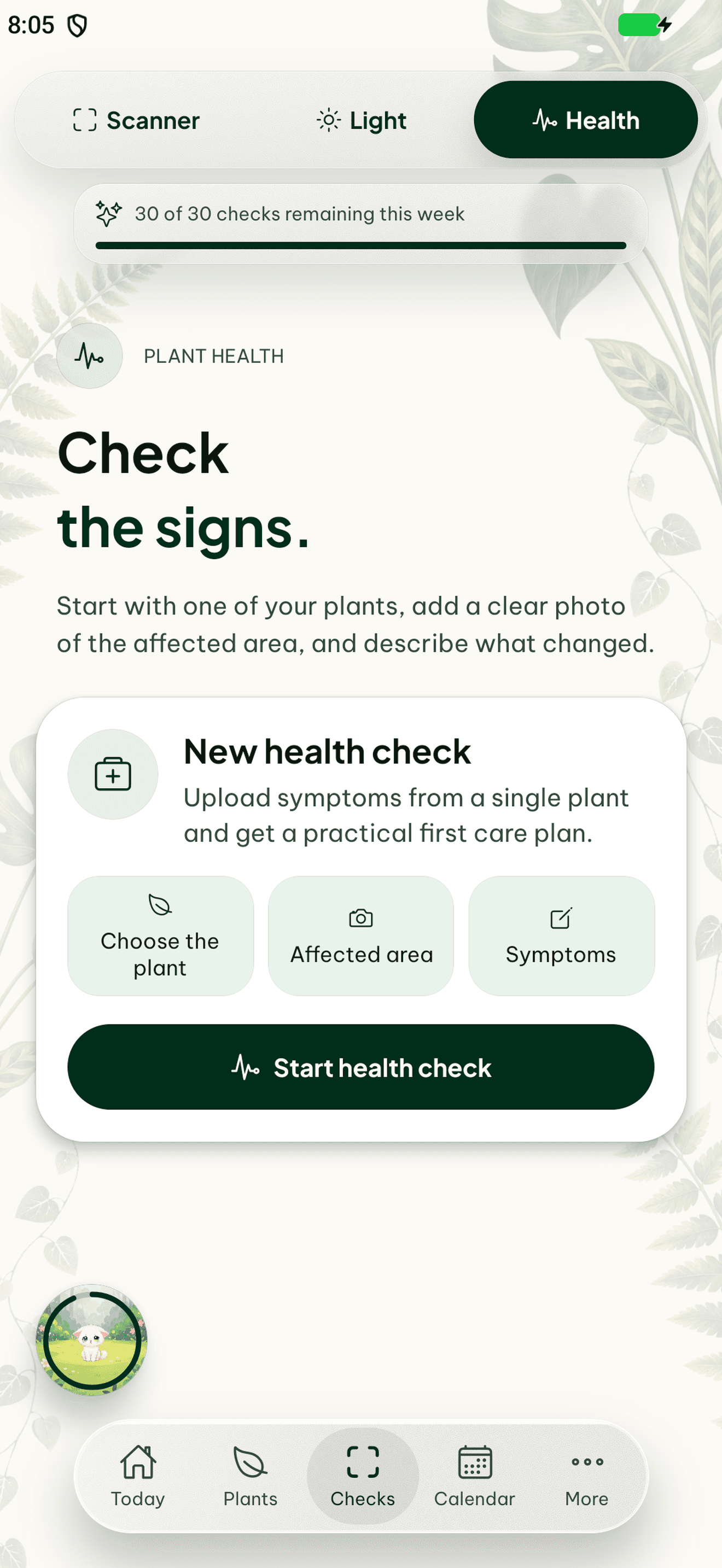

Sources
- Iowa State University Extension: Why is my houseplant wilting?yardandgarden.extension.iastate.edu
- Royal Horticultural Society: How to help a poorly houseplantrhs.org.uk
- University of Maryland Extension: Root Rots of Indoor Plantsextension.umd.edu
- University of Maryland Extension: Diagnose Indoor Plant Problemsextension.umd.edu
- Royal Horticultural Society: Overpottingrhs.org.uk
- University of Wisconsin–Madison Extension: Houseplant Carehort.extension.wisc.edu
- University of Wisconsin–Madison Extension: Root Rots on Houseplantshort.extension.wisc.edu
Checked on 22 October 2026. This guide does not replace advice for your individual plant.