Indoor cyclamen care: Keep it cool and get watering right
In short
The flower stems were upright yesterday; today they are flopping over the pot. Do not reach straight for the watering can. Indoor cyclamen need bright light, cool conditions and lightly moist rather than wet potting mix. Drooping stems can mean either too little or too much water. Feel the mix first.
In this guide
Indoor cyclamen are not hardy garden plants
This guide is for the Cyclamen persicum cultivars sold in flower during autumn and winter. Look beneath the leaves when buying: plenty of unopened buds and firm, healthy foliage are a good start.
These plants do not tolerate frost. A small plant labelled mini cyclamen is not automatically winter-hardy. Other species, such as Cyclamen coum and Cyclamen hederifolium, can be grown permanently in gardens where conditions suit them. Read the label rather than transferring their care to a florist's cyclamen.
A window above a radiator is not the right kind of bright spot
Bright light without strong direct sun and roughly 13–16°C (55–61°F) is a useful starting point. Cultivar and conditions matter; this is not a precise survival threshold. Flowers usually last less well on a hot windowsill above a radiator. Our temperature and draughts guide helps you assess the actual plant position.
Keep leaves off cold glass and out of freezing draughts when you open a window. A bright, cool room is not the same as an exposed balcony. Extra water will not compensate for an overheated spot.
Water the mix, not the crowded centre of the plant
If the surface still feels damp, wait. When it starts to feel dry, lift the inner pot out of its decorative cover. Stand it in a shallow bowl of room-temperature water. Once moisture has reached the top of the mix, take the pot out and let it drain well.
Alternatively, water carefully around the pot rim, not between the tightly packed leaf and flower stems. Empty water from the saucer and outer pot. Aim for an evenly, lightly moist root ball, not a permanent bath or a completely dried-out pot. Our guide to watering houseplants explains the techniques.
Source: New York Botanical Garden: Cyclamen (Cyclamen persicum) – Houseplant Care
Drooping stems: Is the pot heavy or the mix dry?
If the pot is light and the mix dry, water as described above. If it is wet, empty any collected water and do not add more. Yellow leaves alone do not distinguish these causes; too much warmth can also be involved.
If wilting gets worse despite wet mix, or the base feels soft and rotten, examine the roots and tuber more closely. Our root rot guide can help. A sudden collapse during flowering is not a reliable sign that the plant is simply entering its summer rest.
Remove faded stems; do not feed just to fix a problem
Hold a faded flower stem as close to its base as possible and remove it with a twisting movement, gently steadying the plant. Long stubs left among fresh shoots can rot. Keep healthy leaves.
A suitable liquid feed can be used while leaves and flowers are growing. Follow the actual product label and allow for fertiliser already in the potting mix; our fertilising guide helps you work this out. Feeding fixes neither waterlogging nor an excessively warm position.
Source: Royal Horticultural Society: Christmas-flowering houseplants
When the leaves gradually yellow towards spring and summer
After flowering, often in late spring, the foliage may gradually die back. The plant stores reserves in a tuber, a swollen underground storage organ. Continue normal care while healthy leaves are still growing. As they gradually yellow, reduce watering and stop feeding.
Keep a leafless, resting tuber cool and mostly dry, not constantly wet. Remove dead foliage. Timing depends on conditions; the Cyclamen Society also notes that heat can bring rest on early. When new leaves appear, usually towards autumn, start watering cautiously and return the pot to a bright, cool position. Flowering again is possible, but not guaranteed indoors.
Keep the tuber away from curious mouths
Cyclamen are poisonous to cats and dogs; eating the tubers is particularly dangerous. Keep the plant and any loose tubers out of reach of pets and young children.
If a pet eats any, seek veterinary advice promptly rather than waiting for symptoms. For a child, contact a poison centre or medical professional. This is an ornamental plant, not food.
Source: ASPCA Poison Control: Cyclamen
Your checklist
Tick off what you have already checked. Nothing is saved.
Frequently asked questions
Is the silvery pattern on the leaves a problem?
Many cultivars naturally have silver-marbled leaves. An established, regular pattern is not automatically damage. Assess new yellow or rotten patches alongside the mix and growing conditions.
Does a cyclamen need repotting as soon as flowering finishes?
No. A healthy plant does not automatically need a larger pot after its last flower. If fresh mix is needed, the end of the rest period is a suitable time. Leave the top of the tuber above the mix rather than burying it completely.
How long will my cyclamen stay in flower?
Several weeks to a few months are possible in suitable conditions. How far flowering had progressed when you bought it and how warm you keep it make a difference. There is no fixed flowering period for an individual pot.
Let a watering reminder prompt you to feel the mix
Use Plantly's care reminders to take a look at the mix and plant. If watering is too early or not needed during rest, give that feedback. The reminder does not measure moisture: you still need to judge the plant's growing stage.
Explore the related Plantly feature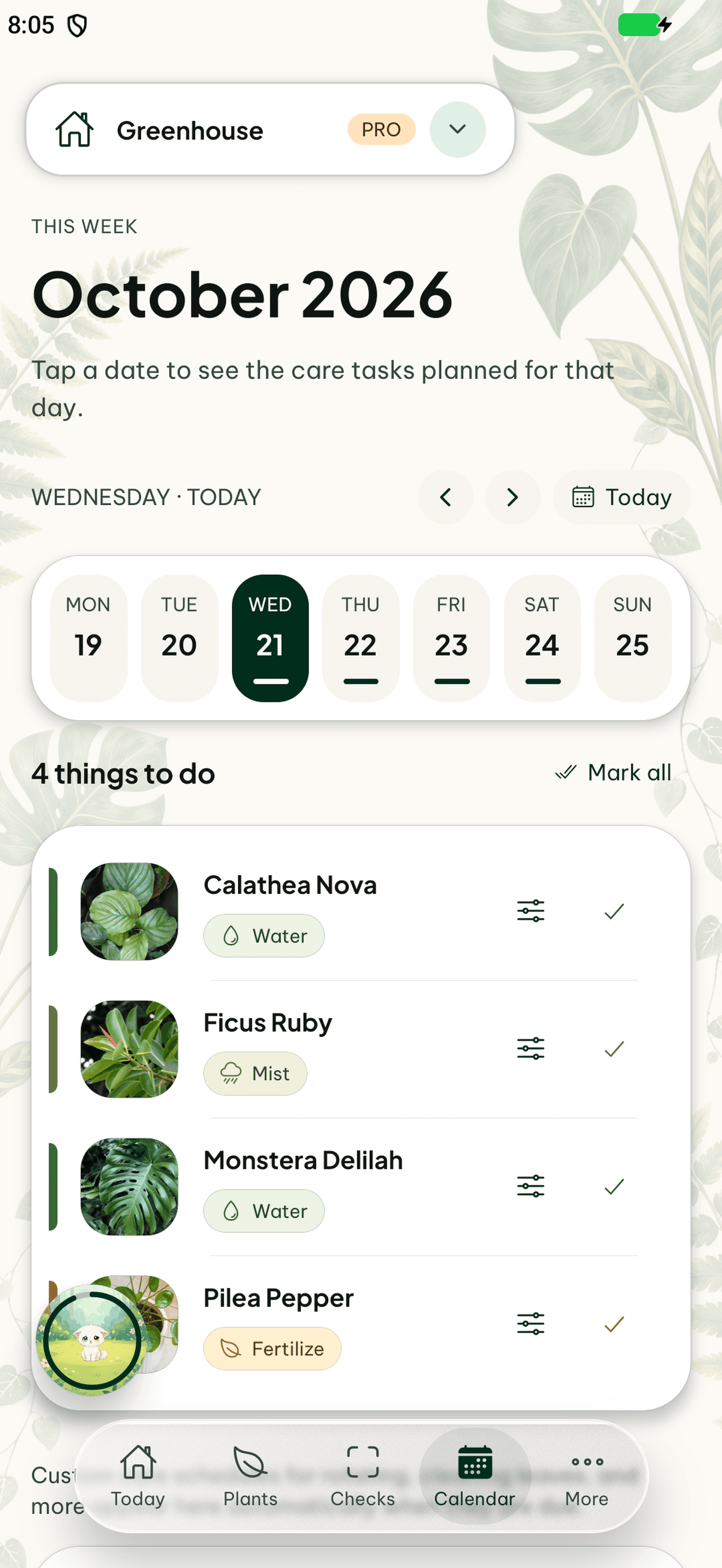

Sources
- University of Wisconsin–Madison Extension: Cyclamenhort.extension.wisc.edu
- Royal Horticultural Society: Cyclamen persicumrhs.org.uk
- New York Botanical Garden: Cyclamen (Cyclamen persicum) – Houseplant Carelibguides.nybg.org
- Cyclamen Society: Florists’ cyclamen – FAQscyclamen.org
- Royal Horticultural Society: Christmas-flowering houseplantsrhs.org.uk
- Iowa State University Extension: All About Cyclamenyardandgarden.extension.iastate.edu
- ASPCA Poison Control: Cyclamenaspca.org
Checked on 28 October 2026. This guide does not replace advice for your individual plant.