Poinsettia care: Help it through the holidays
In short
Your poinsettia is heading for the festive table, but that spot may be rather dark. Give it bright light away from cold draughts and direct heat. Water when the mix surface becomes dry, then let all excess drain away. Good care starts in the shop and on the journey home.
In this guide
The journey home is not a winter outing
Choose a plant with plenty of healthy foliage and firm stems. Leave behind plants that are already wilting or shedding leaves, especially those displayed by cold entrances or outdoors.
Have the whole poinsettia wrapped for transport and take it straight home where possible. Do not leave it in a cold car while you finish shopping. Indoors, remove the sleeve carefully without bending the brittle stems.
Source: Royal Horticultural Society: How to grow poinsettias
Choose light, not the gap between a heater and cold glass
A bright position near a window, out of strong direct sun, usually works better than a dark corner. Around 16–21°C (61–70°F) with fairly steady conditions is a useful guide. Keep leaves off cold glass and away from hot heater airflow or cold air from an open window.
If the festive table stays dark during the day, choose a brighter permanent spot. Our guide to light helps you assess it.
Take the decorative cover off before watering
Feel the mix regularly, paying particular attention to small pots. When the surface starts to feel dry, lift the nursery pot out of its outer pot or closed decorative wrapper. Water with room-temperature water until some runs from the bottom, then let it drain thoroughly before putting it back.
Empty any water left in foil, a saucer or the outer pot. Keep the root ball lightly moist, not constantly wet or completely dry. A fixed number of days between waterings is not very helpful; our watering guide explains why.
Source: Iowa State University Extension: How do I care for a poinsettia?
Dropping leaves? Look at the mix and what happened recently
A heavy, wet pot with yellowing lower leaves fits overwatering. Wilted foliage with a dry, light root ball points more towards too little water. Feel before adding more. Wet mix with worsening wilting may indicate root rot; see our guide to overwatered plants.
Blackened, wilting leaves after a cold journey may be cold damage. Extra water or fertiliser will not reverse it. Provide suitable conditions and see whether healthy stems remain. A single symptom does not establish the cause.
Source: Iowa State University Extension: Guide to Selection and Care of Poinsettias
It does not need a festive makeover
A healthy, already colourful poinsettia usually needs neither extra fertiliser nor a new pot for its short holiday display. Daily misting is not essential either. Suitable light, steady warmth and appropriate watering matter more.
If you keep it growing afterwards, feeding becomes relevant with new growth. Follow the plant's condition and the product label. Our fertilising guide covers the basics.
Keep it after Christmas, but plan ahead for new colour
Poinsettia, botanically Euphorbia pulcherrima, is a perennial. If you want to grow it on, plan pruning and any necessary repotting for spring rather than an impromptu Christmas overhaul.
New colourful bracts depend on long, uninterrupted nights. Allow around eight to ten weeks the following autumn, for example with darkness from 5 pm to 8 am and bright light during the day. Evening light can delay development. Variety and conditions affect the timing; Christmas Eve colour is not guaranteed.
Source: University of New Hampshire Extension: Poinsettias – Care and Reflowering
Enjoy the colour, but keep it out of reach
Keep poinsettias away from young children and pets that chew plants. The milky sap can irritate skin and mucous membranes; wear gloves when pruning later. Its reputation as an extremely poisonous plant is exaggerated, but that does not make it something to eat.
For pets, the ASPCA describes irritation of the mouth and stomach, sometimes with vomiting. If a pet eats part of the plant, seek veterinary advice. For a child, contact a poison centre or medical professional. Do not rely on a blanket reassurance online.
Source: National Capital Poison Center: Are poinsettias poisonous?
Your checklist
Tick off what you have already checked. Nothing is saved.
Frequently asked questions
Are the red parts the flowers?
The large red, pink or cream parts are bracts: modified leaves. The actual flowers are the small yellowish-green structures in their centre.
Does my new poinsettia need to go in a dark cupboard at night?
No. An already well-coloured plant does not need a daily blackout now. Long nights matter when you want it to colour again the following autumn. It still needs light during the day then.
Can I leave it outside as Christmas decoration?
No. Poinsettias are not winter-hardy; even brief freezing exposure can damage leaves. The transport sleeve is for a short journey home, not a substitute for a warm growing position.
Let the reminder prompt you to feel the mix
Plantly's care reminders help you keep track of your poinsettia. If the mix is still moist, give feedback that watering is too early or not needed. A reminder does not measure moisture in the pot.
Explore the related Plantly feature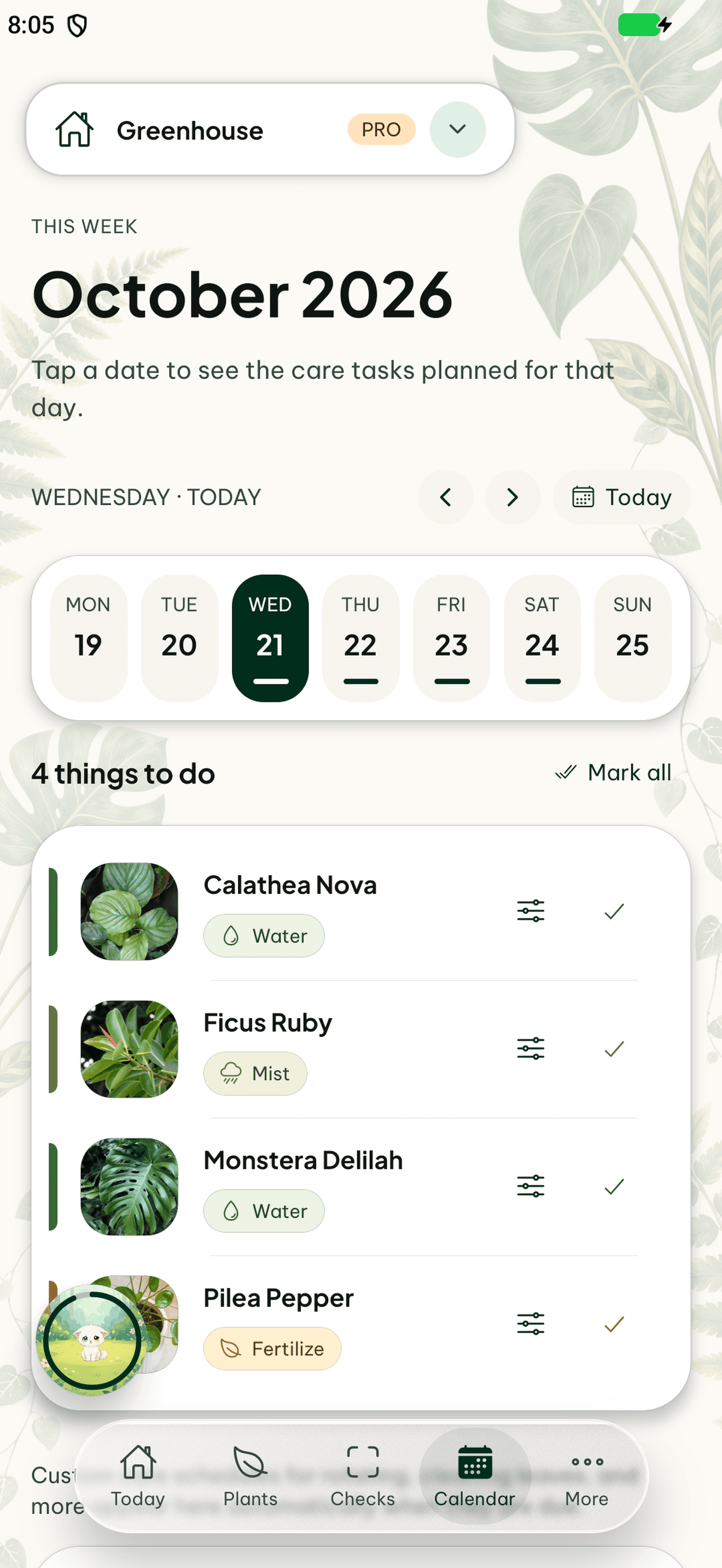

Sources
- Royal Horticultural Society: How to grow poinsettiasrhs.org.uk
- Royal Horticultural Society: Poinsettiasrhs.org.uk
- Iowa State University Extension: How do I care for a poinsettia?yardandgarden.extension.iastate.edu
- Iowa State University Extension: Guide to Selection and Care of Poinsettiasyardandgarden.extension.iastate.edu
- Chicago Botanic Garden: Poinsettia Carechicagobotanic.org
- University of New Hampshire Extension: Poinsettias – Care and Refloweringextension.unh.edu
- National Capital Poison Center: Are poinsettias poisonous?poison.org
Checked on 27 October 2026. This guide does not replace advice for your individual plant.