Identify spider mites and bring an infestation under control
In short
Separate the plant and check for spider mites using a magnifying lens and close leaf inspection. Gently remove confirmed mites and continue checking afterwards. Higher humidity alone will not clear an infestation.
In this guide
1. Look at the whole pattern
Many tiny pale speckles and fine webbing are consistent with spider mites. Heavier infestations cause leaves to lose colour. Inspect undersides particularly carefully.
The mites may be yellowish or greenish. Neither red colour nor a single spider thread proves infestation. Look for living mites and signs that fit together.
Source: Royal Horticultural Society: Glasshouse red spider mite
2. Use a lens and a white-paper check
Gently tap a suspect leaf over white paper. Use a magnifying lens to look for crawling dots; then inspect the leaf underside.
This check helps you find mites; it does not identify the exact species with certainty. Take clear photographs of suspect areas. If you find no living pests, inspect more leaves and consider care problems before choosing a spider mite treatment.
Source: Iowa State University Extension: How can I determine if my houseplant has spider mites?
3. Reduce opportunities for spread
Separate the plant, prevent leaf contact and inspect neighbouring plants. Care for unaffected plants first; wash hands and tools afterwards.
Wipe sturdy leaves with a soft, damp cloth, using clean areas of the cloth as you work. Washing-up-liquid mixtures can damage leaves and are not a standard treatment.
Source: University of Minnesota Extension: Managing insects on indoor plants
4. Remove as many mites as possible with water
Thoroughly rinse sturdy leaves and stems, especially their undersides, without injuring delicate tissue. Protect the root ball from unnecessary soaking and let excess water drain.
If checks reveal more mites, repeat gentle physical removal. Washing once does not demonstrate that the collection is pest-free. For a severely damaged plant, removal may be more practical than continuing to expose neighbouring plants.
Source: Iowa State University Extension: How do I control spider mites on houseplants?
5. Improve conditions without overwatering
Warm, dry air favours reproduction. Check heater exposure and avoid additional plant stress from an unsuitable location.
Misting does not reliably eliminate an existing infestation. Do not keep the mix constantly wet to compensate for dry air: humidity around leaves and moisture around roots are different conditions.
Source: Plant Protection Service Hesse: Spider mites on indoor plants
6. Check whether predatory mites suit your setting
Predatory mites feed on spider mites. Suitability depends on species, temperature, humidity and infestation level; dry rooms can limit success.
Before purchasing, ask for a predator and application suited to your conditions. Mention previous pesticide treatments and check compatibility with other products. A greenhouse recommendation does not automatically suit a living room.
7. Match any further treatment to the pest
Spider mites are arachnids, not insects. A product aimed at an unrelated plant pest is therefore not a dependable substitute. If physical removal is insufficient, seek advice specifically about suitable spider mite control.
Before applying a product, check its current label for your plant, indoor use and intended application location. Follow the product's dose, intervals and precautions. Do not double the dose or mix products in an attempt to speed up the result.
Source: National Pesticide Information Center, Oregon State University: Spider Mites
8. Base decisions on follow-up checks
During active infestation, plan several brief checks each week. Inspect known damage and other leaf undersides. Record living mites, new webbing and new damage; use a starting photograph for comparison.
Fewer mites and no new damage indicate progress. Rising numbers despite careful measures call for another expert assessment. Do not return the plant solely because it looks clean after washing.
Source: University of Minnesota Extension: Twospotted spider mites in home gardens
Your checklist
Tick off what you have already checked. Nothing is saved.
Frequently asked questions
Are spider mites always red?
No. Colour varies with species and life stage. Examine leaf damage, undersides and living mites together instead of relying on colour.
Will misting every day help?
It is not a reliable treatment for an established infestation. Cleaning, suitable growing conditions and repeat inspections matter more. Higher humidity alone is insufficient too.
Should I immediately treat every plant?
First inspect neighbouring plants and separate suspect ones. Treatment should follow what you have actually confirmed.
Do predatory mites always work in a living room?
No. Species, humidity, temperature and previous treatments affect suitability. Discuss these conditions with the supplier before ordering.
Prepare clear observations for the health check
Use Plantly's guided health check with photographs and a description of symptoms to organise what you have noticed. Take clear pictures of leaf tops, undersides and webbing. Its suggestions support your assessment; a blurry photograph cannot reliably identify tiny creatures or their exact species.
Explore the related Plantly feature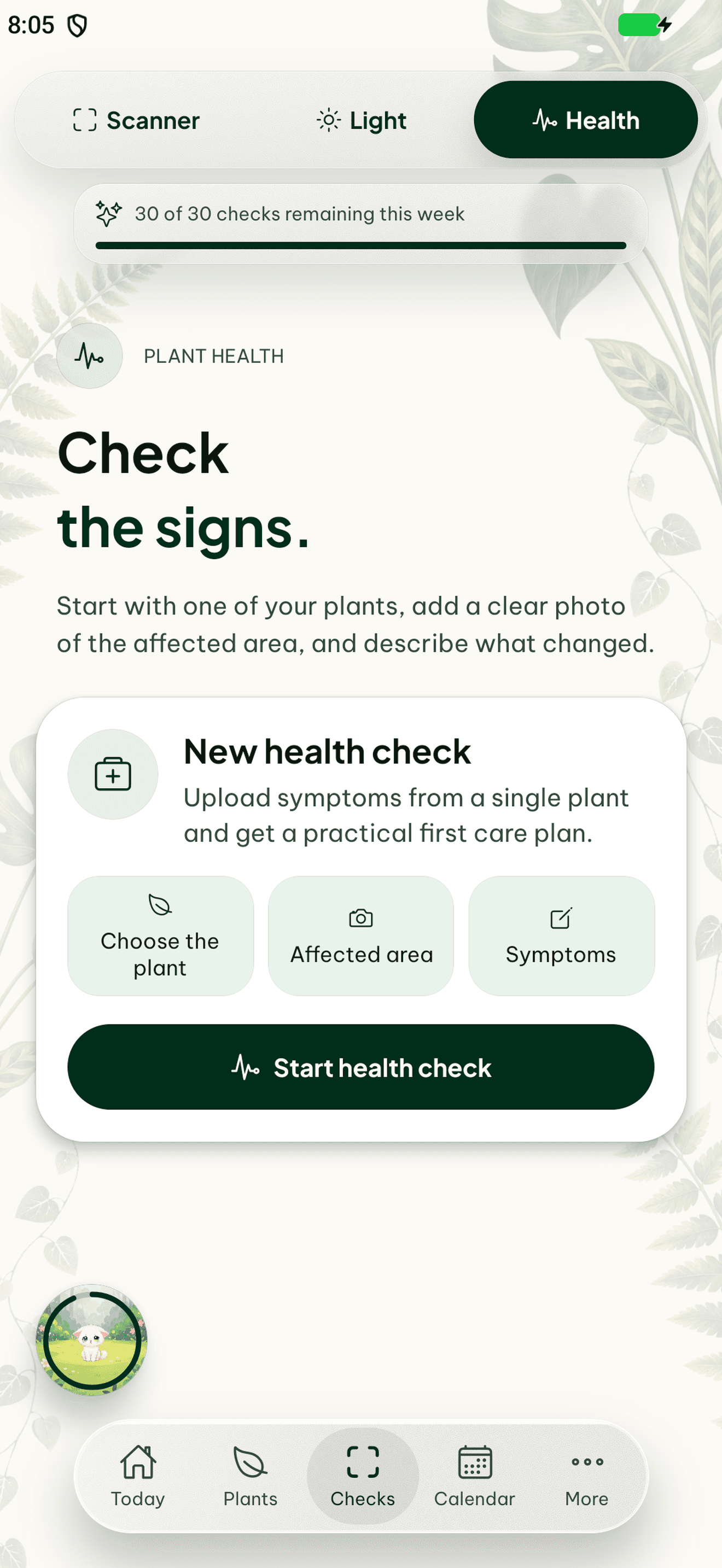

Sources
- Royal Horticultural Society: Glasshouse red spider miterhs.org.uk
- Iowa State University Extension: How can I determine if my houseplant has spider mites?yardandgarden.extension.iastate.edu
- University of Minnesota Extension: Managing insects on indoor plantsextension.umn.edu
- Iowa State University Extension: How do I control spider mites on houseplants?yardandgarden.extension.iastate.edu
- Plant Protection Service Hesse: Spider mites on indoor plantspflanzenschutzdienst.rp-giessen.de
- Colorado State University Extension: Spider Mitesextension.colostate.edu
- National Pesticide Information Center, Oregon State University: Spider Mitesnpic.orst.edu
- University of Minnesota Extension: Twospotted spider mites in home gardensextension.umn.edu
Checked on 22 October 2026. This guide does not replace advice for your individual plant.