Norfolk Island pine care: A little Christmas tree worth keeping
In short
The ribbon comes off, but the tree can stay. Give it bright light, a fairly cool spot and lightly moist roots, with excess water draining away. Brown branches do not automatically mean thirst: look at the pot and its surroundings before adding water.
In this guide
It looks wintry, but it cannot take frost
Norfolk Island pine, Araucaria heterophylla, is not a miniature version of a hardy garden fir. It comes from Norfolk Island in the South Pacific and needs frost-free conditions. In climates with cold winters, do not put it straight onto the balcony or plant it in the garden after Christmas. With suitable care, your tabletop tree can become a long-term houseplant.
Source: UF/IFAS: Norfolk Island Pine
Near the window beats a dim decorative corner
Choose a bright spot, such as near an east-facing window. A few metres farther into the room can mean much less light; sparse or uneven growth is a clue. Introduce stronger sunshine gradually and protect it from hot midday sun. Our guide to indoor light helps you assess a possible spot.
Around 13–18 °C (55–64 °F) is a useful winter starting point, not a strict survival limit. Slightly warmer conditions can work too, but a radiator directly beneath the tree is unhelpful. The Chicago Botanic Garden also recommends a cool, bright winter spot. Keep branches off cold glass and out of cold air when you open a window. What matters is the temperature right beside your plant.
Water as the surface starts to dry
Feel the potting mix and lift the inner pot. When the surface starts to feel dry but there is still some moisture below, water thoroughly with tepid water. Let it drain, then empty the saucer or decorative outer pot after about 15 minutes. A sealed decorative sleeve must not trap the runoff.
The root ball should neither dry out completely nor stay soggy. A cool, dim winter spot usually means a longer wait before watering again; warmth, brighter light or a small pot can change that. Our watering guide explains how to use the feel of the mix together with the pot's weight.
Source: Iowa State University: How do I care for a Norfolk Island pine?
Wet roots cannot make up for dry air
Use a hygrometer to measure humidity near the tree. The New York Botanical Garden describes humidity above 50 percent as preferable. Do not chase that number at any cost throughout your home: condensation on windows or damp walls is a reason to reduce humidification and ventilate.
If the air stays dry, a suitably adjusted humidifier is more useful than occasional misting, which changes humidity only briefly. Clean the device as instructed. Extra watering is not a substitute for humid air. Our humidity guide explains useful measures and their limits.
Brown branches: Look at the root ball first
If the pot is unusually light and the root ball is dry, water thoroughly and let it drain. If it is heavy and has stayed wet for a long time, do not add more. Empty standing water and make sure the drainage holes are clear. A musty smell or soft, dark roots calls for the steps in our overwatering and root rot guide. UConn's species guide also explains why water needs depend on the pot, mix, light and temperature.
A few older needles on lower branches can gradually brown. If browning spreads quickly or affects several tiers, also consider poor light, heating and cold drafts. Fine webbing is a reason to look for pests, not simply to mist more. The pest identification guide helps you decide what you are seeing. After changing the conditions, watch whether more branches are affected and how the new growth develops.
Leave the growing tip alone
Trimming all around the tree will not reliably make it bushier. Keep the upright main shoot intact: cutting off its tip can permanently spoil the tree's characteristic shape. Allow room for a growing tree rather than repeatedly cutting it back to tabletop size.
Source: RHS: Araucaria heterophylla
Keep decorations light, and take them off afterwards
Those fine branches cannot support heavy baubles. If you decorate your tree, choose just a few very light ornaments and attach them without tightening anything around the shoots. Remove them after the holidays. It is still a growing plant, not a permanent ornament stand.
Source: Iowa State University: The Other Living Christmas Tree
After Christmas, it does not need a reset in a huge pot
Resume modest feeding when the tree is actively growing in spring and summer, using a suitable houseplant fertilizer according to its instructions. Brown winter branches are not a reason for an extra dose. Illinois Extension likewise places feeding in the growing season.
Repot only when needed, for example when roots have filled the pot, preferably in spring. Choose a container with drainage and a free-draining, peat-free mix, handling the delicate roots gently. Our repotting guide covers pot size and the practical steps.
When you try a different spot, save a photo and a note about the move in the Plantly plant journal. Next time, you can compare the new growth instead of relying on memory.
Source: RHS: Araucaria heterophylla
Your checklist
Tick off what you have already checked. Nothing is saved.
Frequently asked questions
Can my Norfolk Island pine go outside in summer?
Yes, once nights reliably stay above about 10 °C (50 °F). Introduce it gradually to a sheltered, bright spot away from hot midday sun. Bring it back inside when nights turn cooler; do not wait for the first frost.
Is a north-facing window always too dark?
Direction alone does not tell you how much light reaches the tree. A large, unobstructed window differs from one beneath a balcony. Norfolk Island pine can tolerate low light for a while, but growth often becomes sparse and lower branches may eventually be lost. Bright light is the better long-term choice.
Why is my tree growing towards the window?
Light from one side can lead to uneven growth. Turn the pot a little roughly once a week to give the sides more even exposure. Turning cannot replace a brighter spot if the whole location is too dark.
Keep an eye on the next growth
Save a photo and a short note in the Plantly plant journal when you change the tree's location or care. Later, you can compare whether more damage has appeared or the next growth looks healthy.
Explore the related Plantly feature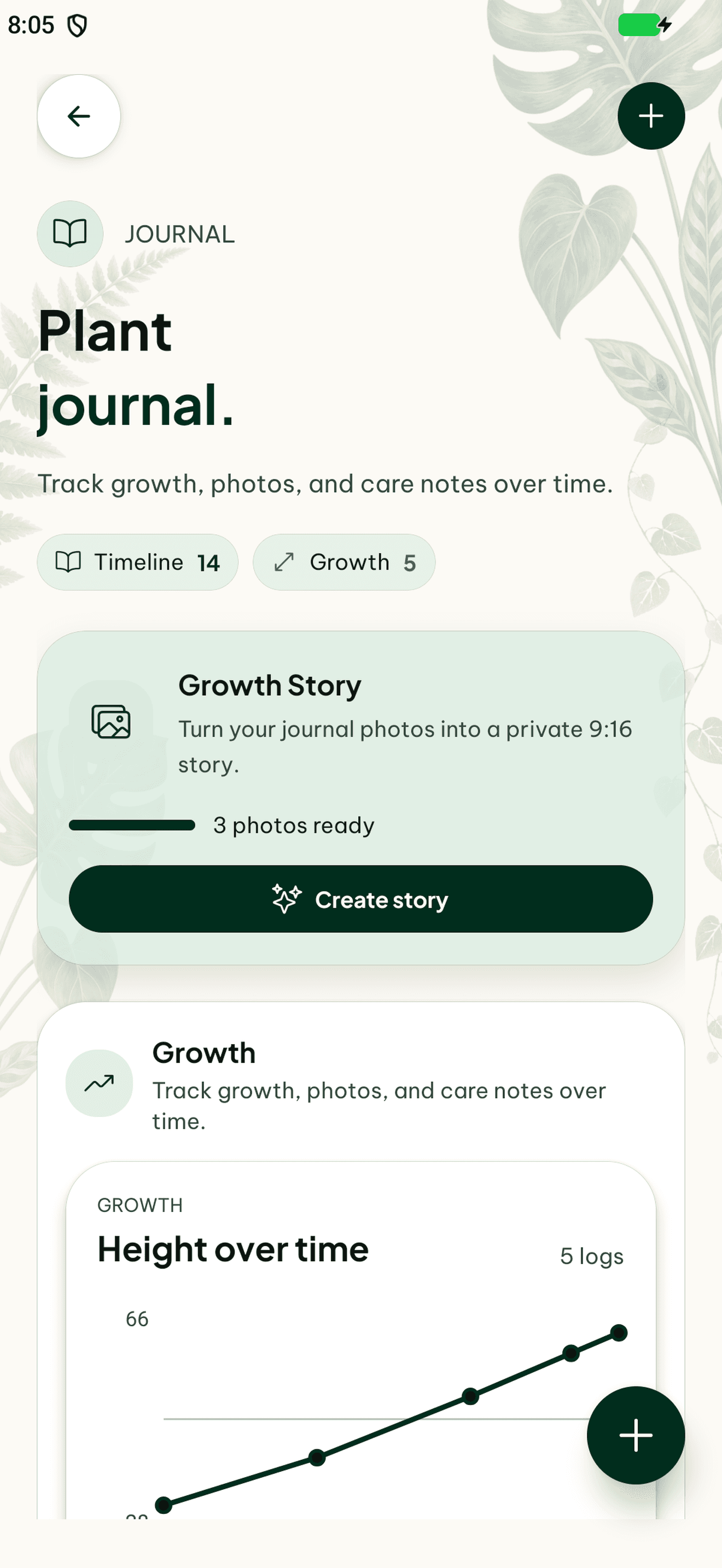

Sources
- UF/IFAS: Norfolk Island Pinegardeningsolutions.ifas.ufl.edu
- NC State Extension: Araucaria heterophyllaplants.ces.ncsu.edu
- Iowa State University: How do I care for a Norfolk Island pine?yardandgarden.extension.iastate.edu
- Illinois Extension: Houseplant care — humidityextension.illinois.edu
- New York Botanical Garden: Norfolk Island Pinelibguides.nybg.org
- RHS: Araucaria heterophyllarhs.org.uk
- Iowa State University: The Other Living Christmas Treeextension.iastate.edu
Checked on 31 October 2026. This guide does not replace advice for your individual plant.