Your indoor jasmine is full of buds – here is what it needs
In short
The hoop is covered in pink buds, but will jasmine be happy on a warm living-room table? A bright, fairly cool window is a better home. Keep the potting mix lightly moist and empty any water from the outer pot. If buds fall, feel the potting mix and look at the surroundings before reaching for fertilizer.
In this guide
Pink buds, white flowers: Still take a look at the label
This guide is for Jasminum polyanthum, a vigorous climber with divided leaves and strongly scented white flowers opening from pink buds. It is often sold trained around a small hoop. The yellow-flowered garden winter jasmine, Jasminum nudiflorum, is a different species. Nor does every plant with “jasmine” in its common name need the same care.
A bright, cool window gives the flowers more time
Keep the pot near a window rather than permanently on a dim sideboard. An east- or west-facing window often works; a bright south-facing window is another option in winter. Strong summer sun through glass is different: introduce it gradually and protect the plant from overheating. Our light guide helps you compare possible spots.
For a plant bought in bud or flower, a spot around 15 °C (59 °F) is usually a good choice. Above a working radiator, conditions are usually warmer and drier than the flowers prefer. Avoid blasts of cold air when ventilating, and measure the temperature beside the plant if needed. The RHS places indoor jasmine among plants for bright, cool rooms.
Source: University of Washington, Miller Library: Indoor jasmine plant care
Lightly moist mix, an empty outer pot
Feel the mix briefly each day at first, especially in a small pot carrying lots of foliage. Water as the surface starts to dry while the root ball below is still lightly moist. Do not wait for all the mix to dry out and the shoots to droop.
Take the inner pot out of its decorative cover, water slowly with tepid water and let the excess drain away. Return it without leaving a reservoir underneath. Our watering guide walks you through it. A plant growing very little in a cool winter spot usually needs water less often than in summer; let the mix guide you.
Use a Plantly care reminder as a prompt to feel the mix, not an automatic instruction to water. If it is too early, you can give that feedback instead of marking an action you have not done as complete.
Source: New York Botanical Garden: Caring for a jasmine houseplant
Falling buds: Dry roots and wet roots need different help
If the pot is light and the root ball is dry, water thoroughly and let it drain. If the mix stays wet, do not add more water just in case. Empty the outer pot and make sure drainage is clear. Shoots that keep wilting despite persistently wet mix call for the root inspection in our overwatering and root rot guide.
If moisture seems right, look for heating, cold drafts and poor light. The University of New Hampshire explains how drafts can increase water loss and bud drop. Clear fallen flowers off the mix; an extra feed will not solve this.
A spray bottle cannot fix the room climate
Jasmine appreciates air that is not too dry. Use a hygrometer before making changes. Occasional misting raises humidity only briefly; persistently dry air is better addressed with a different spot or a suitably adjusted, regularly cleaned humidifier. The flowers do not need a daily shower. Our humidity guide explains useful measures without encouraging damp walls.
Enjoy the flowers first, then sort out the long shoots
After flowering, shorten overlong shoots and thin out congested growth. Use clean, sharp scissors or pruners and retain healthy foliage. Our pruning basics cover tools and technique. Do not cut through bud-bearing shoots simply because the little hoop looks crowded.
Guide new vines loosely along a suitable support. Jasmine will not stay a compact floral wreath on its own: over time, it needs more room or appropriate pruning.
Source: RHS: Jasminum polyanthum
Fresh mix and fertilizer come when needed
A healthy jasmine does not need to be discarded once its flowers fade. Feed during active growth according to the product instructions, taking fertilizer already in the mix into account. A newly purchased flowering pot does not need an immediate extra feed. Repot when needed after flowering, during the following period of growth, not simply because a year has passed.
Choose a free-draining, peat-free mix and a container with drainage holes. The RHS recommends a peat-free, loam-based potting mix; our repotting guide covers sizing and practical steps.
Source: University of New Hampshire Extension: Care of flowering gift plants
New flowers call for planning, not a frost experiment
A cool period plays a part in forming new buds, but sources give conflicting temperatures. The Chicago Botanic Garden describes about 4–10 °C (40–50 °F) in autumn before bud set, whereas the general RHS jasmine guide advises keeping it above 13 °C (55 °F) over winter. These do not make a safe, universal cold-treatment recipe. Plan deliberate flower preparation using your nursery's guidance and a bright, frost-free spot where you can control the conditions, not by experimenting with frost on the balcony.
Source: Chicago Botanic Garden: Jasmine
Your checklist
Tick off what you have already checked. Nothing is saved.
Frequently asked questions
Can I put it on the table for an evening celebration?
Yes, for a short time. Keep it away from candles, radiators and frequently opened exterior doors. Afterwards, return it to its suitable bright spot; days spent as a decoration in a dim room are not a good long-term arrangement.
Can indoor jasmine spend summer outside?
Yes. Once the cold season is over, gradually introduce it to a sheltered, bright spot, allowing time to adjust before direct sun. As a cautious everyday rule, this guide follows the RHS: bring it inside before nights fall below about 13–15 °C (55–59 °F). This is not a protocol for deliberately cooler flower preparation.
Will it flower at Christmas again next year?
That is not reliably predictable at home. Its main flowering season is generally late winter and spring; the stage at sale and growing conditions affect timing. Healthy growth is a useful first goal, not a deadline tied to a particular holiday.
Let the reminder prompt a closer look
Plantly reminds you about care and lets you give feedback when a task is too early or unnecessary. Feel your jasmine's potting mix first and record only care you have actually carried out. A reminder does not measure soil moisture.
Explore the related Plantly feature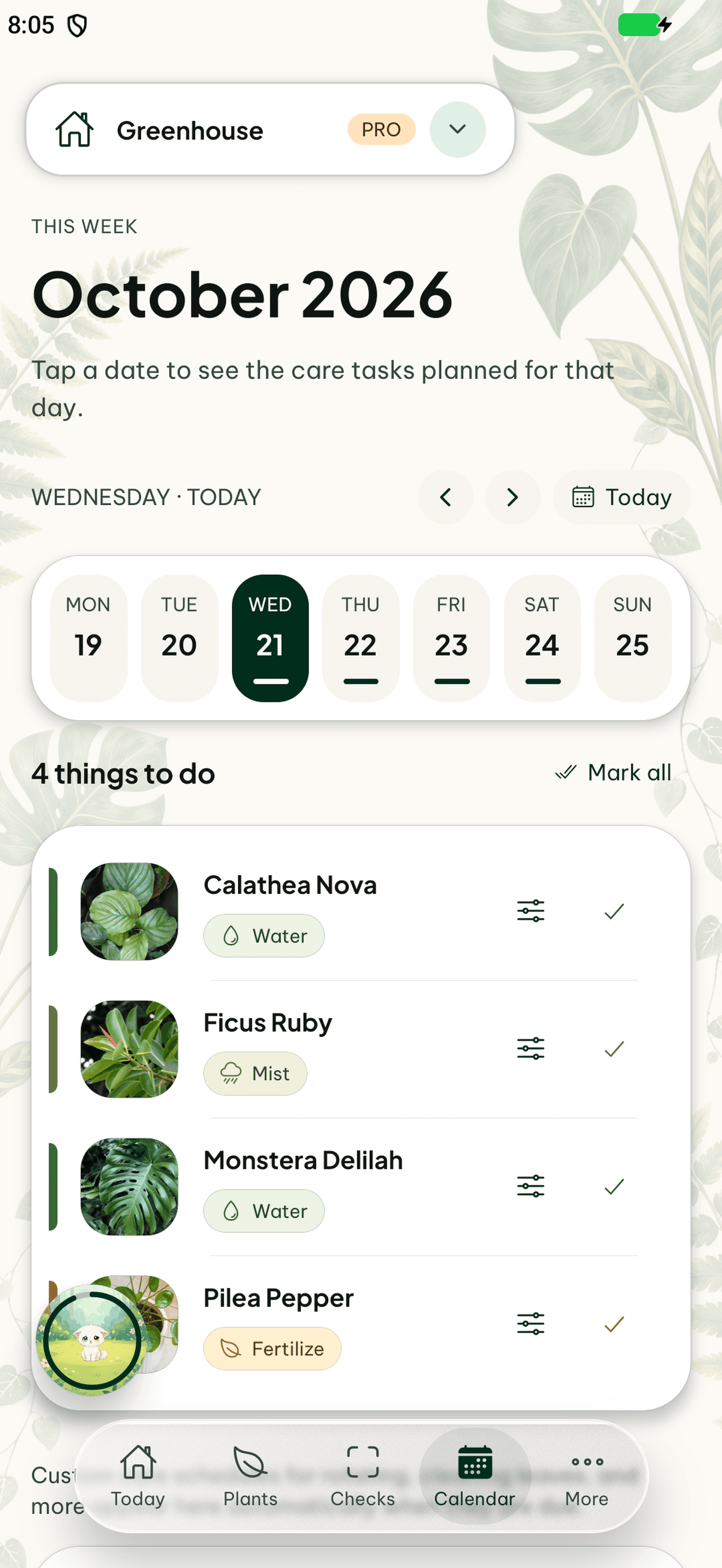

Sources
- Oregon State University: Jasminum polyanthumlandscapeplants.oregonstate.edu
- University of Washington, Miller Library: Indoor jasmine plant caredepts.washington.edu
- New York Botanical Garden: Caring for a jasmine houseplantlibanswers.nybg.org
- Illinois Extension: Watering houseplantsextension.illinois.edu
- Illinois Extension: Houseplant careextension.illinois.edu
- RHS: Jasminum polyanthumrhs.org.uk
- University of New Hampshire Extension: Care of flowering gift plantsextension.unh.edu
- Chicago Botanic Garden: Jasminechicagobotanic.org
Checked on 1 November 2026. This guide does not replace advice for your individual plant.