Soil or hydroculture: What suits your houseplant?
In short
Clay pebbles and a small water-level indicator in the pot – could this work for you? Hydroculture can suit you if you want to grow without potting mix and are willing to manage water levels, nutrients and cleaning. If your main aim is a water reserve, a self-watering pot with potting mix may also work. The right choice depends on the plant, the setup and your routine.
In this guide
Look below the surface first
In a conventional pot, the ingredients in the potting mix hold water and nutrients. You assess the root ball, water when needed and let excess drain. Our general watering guide covers this approach.
A self-watering pot with potting mix adds a water reservoir. A wick or another connection draws water into the mix, where the roots still grow. These systems tend to keep the root ball evenly moist.
In the LECA hydroculture described here, roots grow without a soil root ball, among clay pebbles above and partly in a limited reserve of water with dissolved nutrients. This liquid is the nutrient solution. LECA means lightweight expanded clay aggregate. You may also see the term “semi-hydro”; terminology varies. Look at the actual setup: the medium, water level and route by which water reaches the roots.
Which setup helps with your everyday care?
Keep a conventional pot with drainage if you want to control drying periods closely and your current care works well. A reservoir pot with potting mix is an option for suitable plants that like even moisture. This continuous supply is a poor starting point for species that need to dry considerably between waterings.
Clay pebbles are durable and support roots, but supply almost no nutrients themselves. A visible water reserve can make care easier to follow. In return, you manage nutrition through the solution and keep the container clean. Our guide to choosing potting mix explains what conventional mixes offer.
Source: Virginia Cooperative Extension: Properly Watering Container Houseplants
Start with a plant already grown in hydroculture
Try the system first with a healthy plant that was raised in hydroculture. The German Hydroculture Society describes a setup with a culture pot, matching water-level indicator, clay pebbles and a watertight outer container. Choose materials intended for growing plants and components designed to work together.
Converting a plant from potting mix means asking its roots to adjust to different conditions. The RHS specifically warns of a root rot risk during this transition. Avoid washing the mix from a large, prized plant just to try out clay pebbles.
A rooted cutting in a glass of water does not automatically share the same care routine either. Our cuttings guide covers rooting and transfer to potting mix; for clay pebbles, use guidance suited to the species and your chosen setup.
Source: Royal Horticultural Society: A guide to compost mixes for houseplants
Let the water level fall
In a classic setup marked MIN, OPT and MAX, the float shows the liquid level. Let it fall to MIN, then follow the checking or waiting period specified for the plant and container. MIN does not necessarily mean everything is dry.
For normal use, follow the instructions, usually refilling to OPT. MAX is not a permanent target; excess water takes air away from roots. Dry surface pebbles alone are not a refill signal. Test a stuck indicator with a gentle tap. Pour or draw off any excess after overfilling.
Source: Deutsche Gesellschaft für Hydrokultur: Hydrokultur – So einfach geht’s
Match your water and nutrients
Choose a complete nutrient product intended for the growing method and your source water. Read its dose and directions rather than copying the amount used in a pot of soil. With very low-mineral water in particular, calcium and magnesium must also be supplied appropriately. Our guide to choosing water helps you assess your source.
If your setup calls for measurements, use targets appropriate to it: pH describes how acidic the solution is; EC indicates the amount of dissolved salts, but does not reveal every individual nutrient. One target or feeding interval will not suit all plants and systems.
Source: Oklahoma State University Extension: Hydroponics (HLA-6442)
A reservoir still needs a care routine
Plan to inspect the reserve and plant regularly, and maintain the container and solution as the system instructions specify. Indefinite topping up does not replace cleaning or a scheduled solution change. When buying, also ask how to access the reserve and remove excess liquid.
Light requirements still depend on the plant; clay pebbles cannot make a dark corner suitable. Our lighting guide helps you choose a position. Look under the leaves too: plants without potting mix can still carry pests. For suspicious insects or mites, use our pest identification guide.
If leaves increasingly droop despite water being available, do not add more just in case. Inspect the level and roots. Soft, rotting roots are a warning sign; our root rot guide explains the symptoms. Its treatment steps for pots of soil do not replace a care plan for your hydroculture setup.
Source: University of Minnesota Extension: Small-scale hydroponics
Your checklist
Tick off what you have already checked. Nothing is saved.
Frequently asked questions
Does hydroculture need a pump?
Not in the passive clay-pebble setup described here. It uses a limited reserve and water movement through the material. Other hydroponic systems move or aerate the nutrient solution with pumps; their care instructions are not directly interchangeable.
Are cacti and orchids ruled out altogether?
No. They too can grow without soil under suitable conditions. Species that need dry periods require different reservoir management from many moisture-loving foliage plants. A plant already grown in suitable conditions, with specific care instructions, is a clearer starting point than converting one yourself.
Can hydroculture take care of watering while I am away?
A reservoir can store water, but how long it lasts depends on the plant, light, temperature and container. Learn its consumption before leaving and arrange an inspection if needed. Do not fill above the recommended marks just in case.
Keep the setup with the plant’s profile
In your Plantly journal, note the system and source water you use. Add the nutrient product, dose actually applied and date. A photo of the fill marks can also help someone caring for the plant. Inspect the water level and indicator function directly at the pot.
Explore the related Plantly feature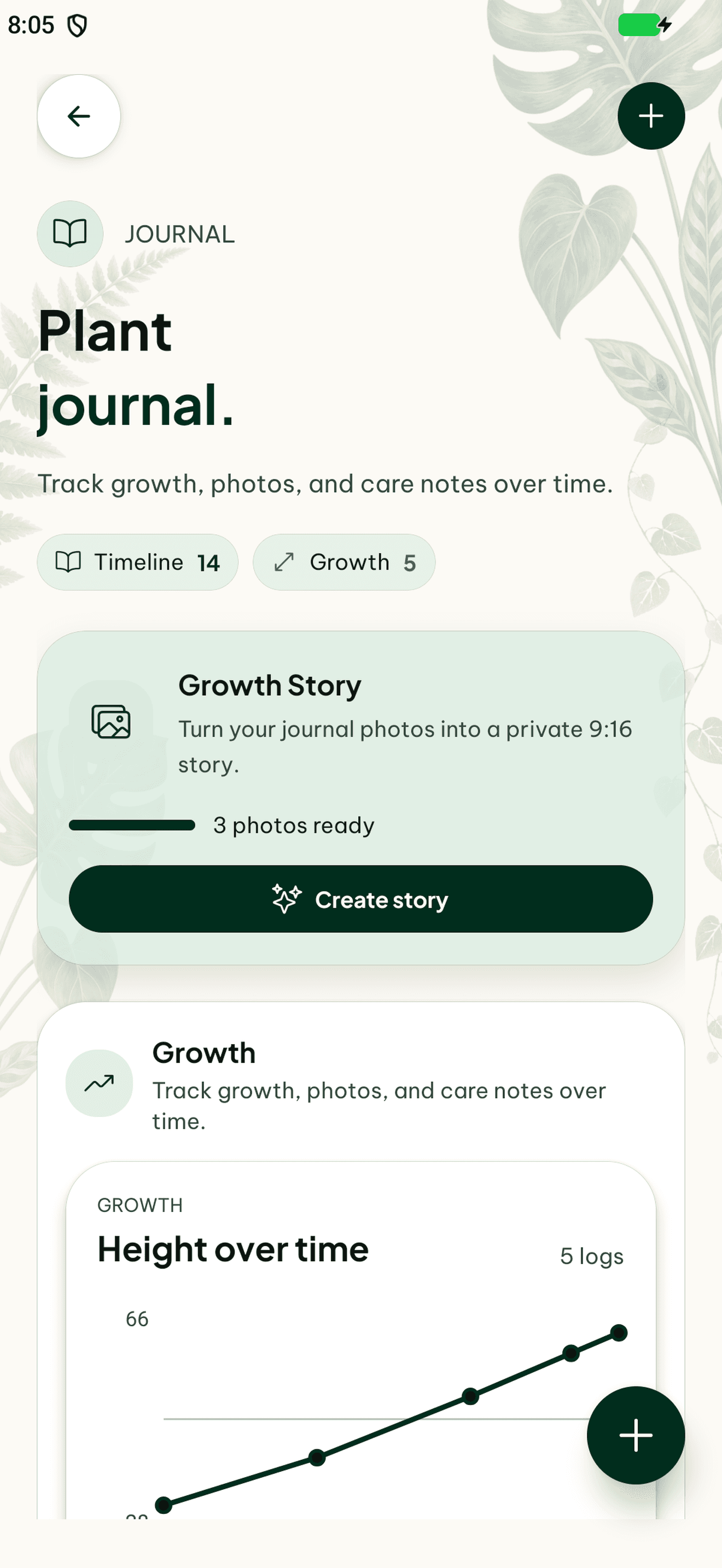
Sources
- Royal Horticultural Society: Hydroponicsrhs.org.uk
- Virginia Cooperative Extension: Properly Watering Container Houseplantspubs.ext.vt.edu
- Royal Horticultural Society: A guide to compost mixes for houseplantsrhs.org.uk
- Deutsche Gesellschaft für Hydrokultur: Hydrokultur – So einfach geht’shydrokultur-dghk.com
- Oklahoma State University Extension: Hydroponics (HLA-6442)extension.okstate.edu
- University of Minnesota Extension: Small-scale hydroponicsextension.umn.edu
Checked on 8 November 2026. This guide does not replace advice for your individual plant.