A new houseplant at home? Help it settle in
In short
Is your new plant still in its sleeve? Unpack it gently, inspect the leaves and pot, then keep it apart from your other plants in suitable light. Its condition tells you whether it needs water or a different pot. A healthy plant does not need every care task done at once.
In this guide
On arrival: unpack and see what you have
Gently remove the box, transport sleeve and loose packing material. Keep the label and find out which species you have: that determines its light, temperature and watering needs. Lift the nursery pot out of its decorative cover, look for drainage holes and empty any standing water. This guide is for rooted potted plants; water culture and newly received cuttings need their own care.
Photograph the whole plant and any existing creases or marks. You will have something to compare with later. For your next purchase, protect tropical plants from cold on the journey home. Once unpacked, give them a suitable position rather than placing them beside a heater to warm up. The RHS growing guide explains why the plant's needs matter more than the most attractive spot on a shelf.
Source: Royal Horticultural Society: Buying plants from garden centres
A separate, well-lit spot helps protect your collection
Gently turn over a few leaves and look at leaf joints, young shoots, pot rims and saucers. Look for pests, webbing, sticky patches or white cottony clusters. Gifts and plants from familiar shops deserve the same inspection. Photograph anything suspicious before wiping it away; our pest identification guide helps you work out what you are seeing.
Keep newcomers apart at first, ideally in another room with suitable light and growing conditions. If you have no spare room, distance without touching foliage helps, but offers less protection against flying insects. Allow around four weeks with repeated inspections, for example weekly. This follows the University of Maine's month-long recommendation; Minnesota suggests one to two weeks and Clemson six weeks. None guarantees a pest-free plant. If suspicious signs appear, keep it separate until you have identified the cause and worked out what to do next.
Source: University of Minnesota Extension: Managing insects on indoor plants
Good light does not mean an immediate move into strong sun
Match the position to the species and the light actually available. Many tropical foliage plants need bright, indirect light; many cacti need much more sun. If you do not know the plant's previous exposure, avoid an abrupt move into intense direct sunlight. Introduce suitable species to it gradually. A dark corner is not a lasting solution for settling in either. Our lighting guide helps you assess the spot.
Keep leaves away from cold glass and hot air from radiators or heating vents. Moving a plant to a better position makes sense; shifting it between very different spots every day makes changes harder to interpret. The University of Maryland's temperature advice and our temperature and drafts guide help you choose. For sensitive species, assess humidity too, rather than trying to compensate for dry air by adding more water to the pot.
Source: University of Maryland Extension: Lighting for indoor plants
Feel the root ball before reaching for the watering can
The potting mix may still be thoroughly moist when a plant arrives. Lift the nursery pot and gently feel below the surface without damaging roots. For many foliage plants, the top few centimetres and the pot's weight are useful clues; how far the mix should dry depends on the species. Cacti, orchids in bark and reservoir systems cannot all be judged with the same finger test.
When watering is needed, wet an ordinary soil-based pot evenly and let excess water drain away. Empty the decorative pot or saucer. Do not automatically adopt a fixed weekly routine from the shop. Our watering guide explains the differences between plant groups.
Source: University of Maryland Extension: Watering indoor plants
A nursery pot alone is not a reason to repot
Leave an otherwise healthy plant in its current pot for now if it drains and you can care for it successfully there. A few roots at a drainage hole are a reason to look more closely, not an automatic emergency. A densely rooted ball with hardly any mix left, or unusually rapid drying, makes a stronger case for a change.
A rule such as “repot after exactly two weeks” is not very useful. Plan routine repotting for active growth where possible. Rotting roots or a pot without drainage need attention sooner. Choose a container and mix suited to the species; our repotting guide takes you through the job.
Fertiliser does not cure the stress of a move
Check the label and ask the seller about previous feeding. Some potting mixes already contain nutrients or slow-release fertiliser. Do not add more fertiliser sticks or liquid feed just in case.
Feed according to the species and actual growth, following the product label. Extra fertiliser will not fix insufficient light or damaged roots. Our feeding guide helps you decide when the next application is appropriate.
One yellow leaf is different from worsening wilt
An occasional older leaf may turn yellow. A change of position can trigger leaf drop, for example in a weeping fig. If the remaining leaves stay firm, there are no pests or fresh signs of damage and the mix is appropriate for the species, keep conditions suitable and consistent, and continue inspecting. Your plant does not have to produce a leaf within a week.
If it is losing noticeably more foliage, reassess water, position and pests. Our leaf drop guide helps with this. Increasing wilt despite a wet root ball, or a soft stem base, should not wait until a settling-in period has ended. Soft, mushy roots are a warning sign; follow our root rot guide for the next steps.
Source: Royal Horticultural Society: Leaf damage on houseplants
Over the next few weeks, get to know this pot
Look beyond the best-looking leaf. Is the pot gradually getting lighter? Are the stems firm? Is any fresh damage appearing? During the initial period apart, inspect thoroughly for pests at least weekly; watering needs may require more frequent assessment depending on the species and conditions.
In Plantly, you can save an arrival photo with the date and position, then add later pictures from a similar angle. A short note such as “mix still damp, did not water” makes comparisons easier. Once the plant stays stable, use what you have learned to guide its regular care. If a lack of new shoots is your only concern, read our guide to slow growth.
Source: University of Maine Cooperative Extension: Caring for houseplants in Maine
Your checklist
Tick off what you have already checked. Nothing is saved.
Frequently asked questions
How long does a new houseplant take to settle in?
It may take several weeks, depending on the species and how different its new position is. There is no universal finish date. Stable foliage and no fresh damage matter more. Increasing wilt, a soft stem base or signs of pests need attention sooner.
Should I water it as soon as it arrives?
Only if it needs water. A heavy pot with moist mix does not need an extra welcome drink. Assess the root ball and the species' needs; a dry surface alone does not always tell you enough.
Can it join the other plants after four weeks?
If repeated inspections remain clear, you can end the initial period apart. Four weeks is a guide, not proof. Keep it separate if pests or fresh suspicious marks appear; a longer observation period makes sense where extra protection is important.
Should I use a pest treatment as a precaution?
Treatment needs to match an identified problem. Inspect carefully first and identify anything suspicious. Treating every newcomer automatically does not replace keeping it separate or inspecting it again later.
Remember how your plant looked when it arrived
Save an arrival photo in your Plantly journal with the date, position and any existing damage. Add a comparison photo and a short note during later inspections. This makes it easier to spot fresh changes and follow how the plant develops.
Explore the related Plantly feature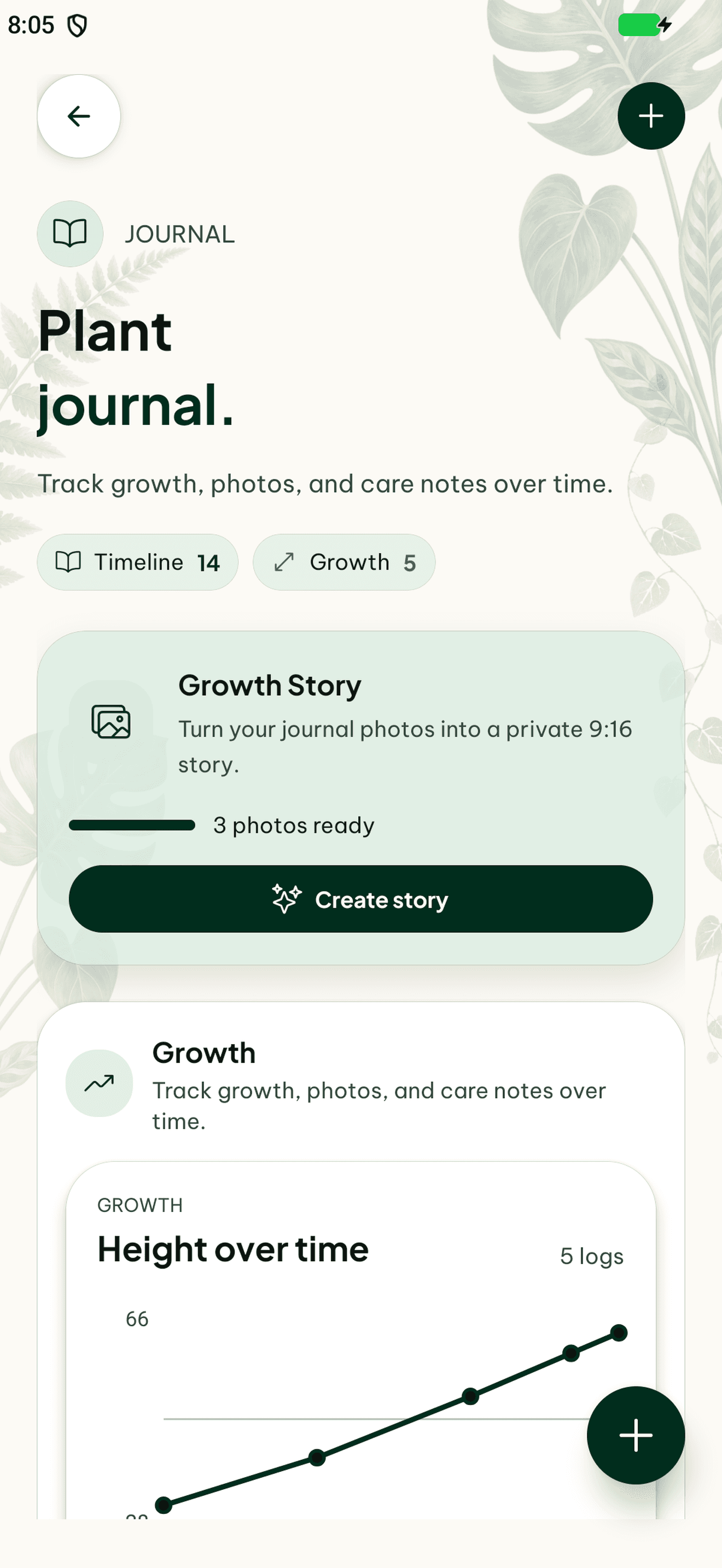

Sources
- Royal Horticultural Society: Buying plants from garden centresrhs.org.uk
- University of Minnesota Extension: Managing insects on indoor plantsextension.umn.edu
- University of Maryland Extension: Lighting for indoor plantsextension.umd.edu
- University of Maryland Extension: Watering indoor plantsextension.umd.edu
- University of Illinois Extension: Repottingextension.illinois.edu
- University of Illinois Extension: Houseplant careextension.illinois.edu
- Royal Horticultural Society: Leaf damage on houseplantsrhs.org.uk
- University of Maine Cooperative Extension: Caring for houseplants in Maineextension.umaine.edu
Checked on 5 November 2026. This guide does not replace advice for your individual plant.