Your houseplant is not growing – what to do next
In short
You have been looking at the same leaves for weeks. Is it time for fertilizer? First, work out whether your plant is simply growing slowly or also showing damage. Its species, light, temperature and root-ball conditions will help you decide whether to wait or adjust its care.
In this guide
Is it growing slowly, or is it declining?
Firm leaves without new damage are a different starting point from wilting shoots, increasing yellowing or a soft stem base. If you see those changes, investigate promptly. A lack of new growth does not explain them.
Look beneath leaves and around young shoots too. Sticky patches, webbing or visible insects point you toward pests. If there are no such signs, work through the light and pot conditions calmly; counting new leaves alone will not give you a diagnosis.
Source: University of Illinois Extension: Houseplant Troubleshooting
What pace should you expect from this plant?
A ZZ plant naturally grows slowly. Comparing it with another species putting out lots of fresh growth will not tell you much. It is more useful to ask whether your own plant used to grow much more actively in the same spot.
Shorter, darker days slow many houseplants down. That does not mean every species needs a prescribed winter break: the growing season depends on the plant and its conditions. Has the spot become cooler too? Measure beside the leaves and compare the reading with the species’ requirements. Our guide to temperature and drafts can help.
Source: NC State Extension: Zamioculcas zamiifolia (ZZ plant)
Long, thin shoots are not necessarily good growth
When a stem gets longer while the gaps between its leaves keep increasing, insufficient light is often the cause. Even a plant that tolerates low light will not necessarily grow strongly there.
Look from leaf level: how much window light actually reaches the plant behind a curtain, other pots or the edge of a shelf? If needed, find a brighter spot suited to the species. Introduce much stronger sunlight gradually rather than suddenly moving it to a hot south-facing window. The light guide will help you compare positions.
The pot tells you more than a watering calendar
Lift a manageable inner pot and feel below the surface of the mix without damaging roots. A heavy root ball that is still wet inside does not need another drink yet. If it is too dry, water thoroughly according to the plant’s needs and let the excess drain away. The amount of drying a fern tolerates is different from that of a succulent.
If leaves droop in wet mix, do not automatically add water. Check drainage holes and water standing in the outer pot; damaged roots are one possible cause. The watering guide explains the checks, while the root rot guide covers next steps when you suspect root damage.
Source: University of Maryland Extension: Watering Indoor Plants
Fertilizer is not a start button
Too much fertilizer can leave salts in the mix and damage roots. A poorly lit or waterlogged plant does not need an extra helping just in case. Pale leaves and weak growth alone do not prove a nutrient deficiency.
If light and watering are suitable, review previous feeding and the potting-mix packaging: some mixes already contain nutrients. Where feeding is appropriate, follow the product’s dilution instructions rather than making a stronger solution. Our fertilizing guide takes you through that decision.
Source: University of Maryland Extension: Fertilizer for Indoor Plants
A bigger pot helps only when the plant needs one
If the mix dries unusually quickly after a thorough watering, new leaves stay smaller and roots densely fill the root ball, take a closer look. A single root tip at a drainage hole is a reason to investigate, not an automatic instruction to repot.
When the pot really is too cramped, plan suitable repotting, preferably during active growth. A large pot with plenty of extra mix that stays wet can create new problems. Acute root damage, however, needs prompt attention rather than waiting for the usual repotting season.
Give your changes a clear starting point
Take a photo of the whole plant and its growing tip today. Note when growth slowed and what changed beforehand: its position, light, pot, watering or fertilizer. The Plantly plant journal keeps those pictures and notes with the right plant profile.
Address the problems you find rather than giving the plant every possible treatment just in case. Compare it with your starting photo after a few weeks: is a bud changing, a leaf opening or the existing foliage staying stable? Investigate new damage during your next care checks. If growth remains stalled through its usual growing season despite suitable conditions, your photos and specific care details will help a nursery investigate further.
Source: Royal Horticultural Society: How to grow houseplants
Your checklist
Tick off what you have already checked. Nothing is saved.
Frequently asked questions
How many weeks without a new leaf is normal?
There is no shared cutoff. Species and growing conditions differ. Healthy-looking foliage does not replace assessing the growing spot; increasing damage is a reason to investigate regardless of how long it has been.
Should I move it somewhere warmer to speed up growth?
Only if its current spot is too cold for the species. High temperatures with insufficient light can encourage weak, thin shoots. A position directly above a radiator is not a general growth solution.
It has not made a new leaf since repotting. Should I repot again?
Not for that reason alone. Assess light, moisture and drainage in the new setup. Another intervention should address an identifiable problem, rather than a deadline or a lack of new leaves.
Make small changes easier to see
Keep a starting photo and notes about location and care changes in the Plantly plant journal. Later pictures taken from a similar angle make progress at the growing tip easier to assess than memory alone.
Explore the related Plantly feature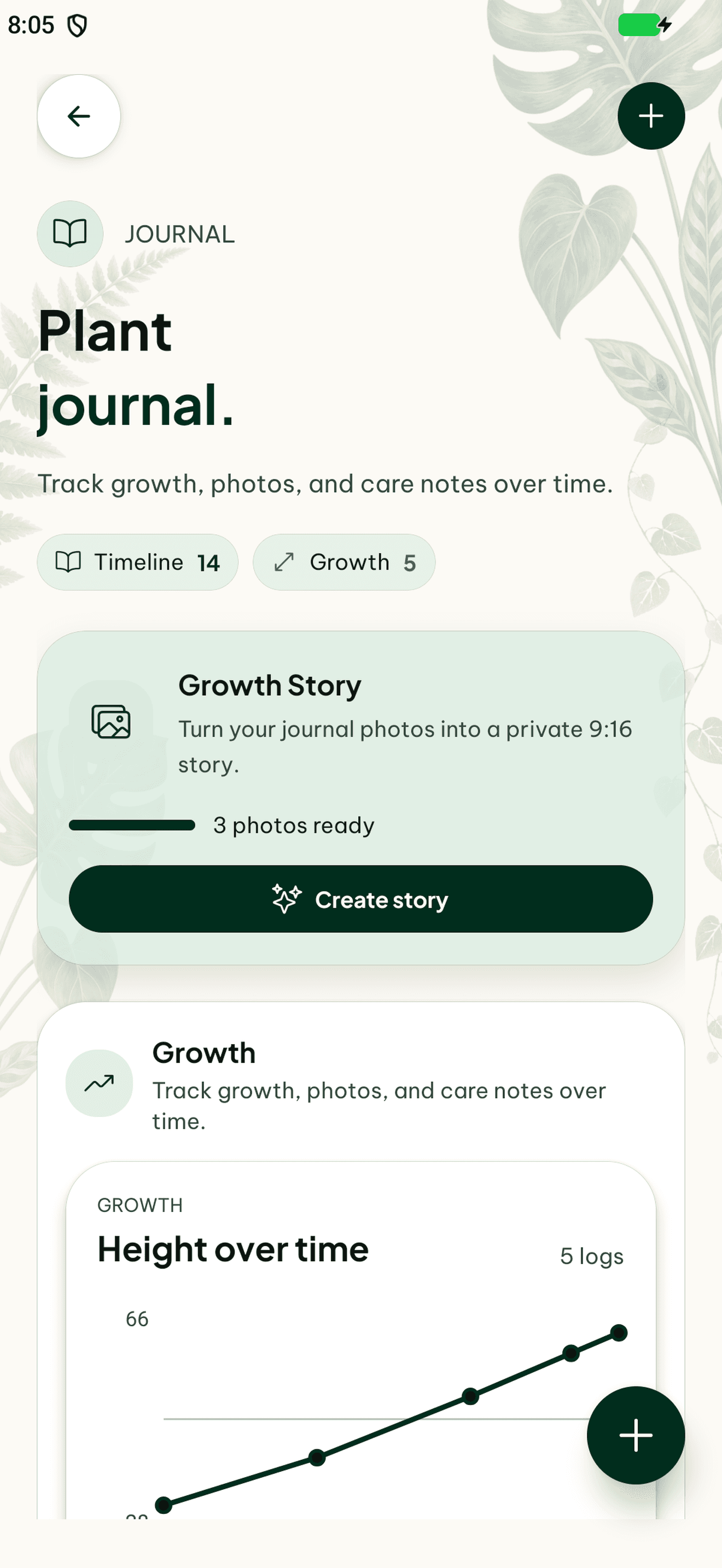

Sources
- University of Illinois Extension: Houseplant Troubleshootingextension.illinois.edu
- NC State Extension: Zamioculcas zamiifolia (ZZ plant)plants.ces.ncsu.edu
- Iowa State University Extension: Diagnosing Houseplant Problems from Improper Environmental Conditionsyardandgarden.extension.iastate.edu
- University of Maryland Extension: Watering Indoor Plantsextension.umd.edu
- University of Maryland Extension: Fertilizer for Indoor Plantsextension.umd.edu
- University of Illinois Extension: Repottingextension.illinois.edu
- Royal Horticultural Society: How to grow houseplantsrhs.org.uk
Checked on 4 November 2026. This guide does not replace advice for your individual plant.