Flaming Katy care, from the first flowers to the next season
In short
Is the mix in that decorative gift pot still damp? Leave the watering can for now. Flaming Katy needs plenty of light, time to dry between waterings and free drainage. Its thick leaves store water. The plant can keep growing after flowering; forming new buds later calls for long nights.
In this guide
Plenty of light, without a hot spot at the window
This guide covers Kalanchoe blossfeldiana and its flowering cultivars, including double-flowered Calandiva forms. Those fleshy leaves make it a succulent: a plant that stores water in its tissues. It does not need to be treated like a constantly thirsty bouquet.
Keep the pot in a bright window. Winter sunshine can be useful; introduce stronger summer sun gradually and protect it from hot afternoon sun. Long, thin shoots suggest insufficient light. Our light guide helps you compare possible spots.
Around 18–21 °C (64–70 °F) works well during the day, with somewhat cooler nights. Keep it frost-free and out of hot air from a radiator. A spot that is not overheated helps flowers last; the New York Botanical Garden also recommends relatively cool conditions during flowering.
All those flowers do not mean daily watering
Feel below the surface and lift the inner pot. If the mix is still noticeably damp and the pot is heavy, wait. Water once the mix has dried well and the pot feels lighter, without waiting for the plant to wilt badly.
Then water the mix slowly with tepid water until some runs out below. Let the pot drain and empty its decorative cover or saucer. Our watering guide explains how to wet the whole root ball. The same pot often dries more slowly in a cool winter spot than in a warm summer location.
Source: University of Wisconsin–Madison Extension: Houseplant care
Soft leaves: Do not automatically add water
A dry, light root ball together with shrivelling leaves points towards a lack of water. Water thoroughly and let it drain. If the root ball stays wet while leaves yellow or shoots soften, do not add more: empty standing water and check the drainage.
If the plant keeps deteriorating, inspect its roots. Soft, rotting areas need different help from dry mix. Our overwatering and root rot guide takes you through the next steps. One yellow leaf alone does not prove root rot.
Finished flowering does not mean finished as a plant
Trim back spent flower stems with clean scissors without tearing away healthy foliage. You can lightly shorten overlong shoots after flowering. A hard cutback is not compulsory.
Repot only when needed, for example when roots have filled the container. Choose a pot just a little larger, with drainage holes, and a free-draining, peat-free mix, such as a suitable succulent mix. Our potting mix guide explains the choice, while the repotting guide covers the practical steps.
A newly purchased flowering pot does not need an immediate extra feed. Later, feed modestly during active growth according to the product instructions, taking fertilizer already in the mix into account. Our fertilizing guide explains more. Water use often falls after flowering; keep feeling the mix rather than imposing a fixed dry rest on the calendar.
Source: University of New Hampshire Extension: Care of flowering gift plants
For new buds, the night matters more than extra fertilizer
If your healthy plant later produces only leaves, look at the evening lighting. Flaming Katy is a short-day plant: it forms buds when nights stay long enough for several weeks.
Allow about six weeks of roughly 14 hours of uninterrupted darkness each day, for example from 6 pm to 8 am. The plant needs a bright position during the day. A room without evening lighting is useful; a permanently dark cupboard is not. During this preparation, around 18–21 °C (64–70 °F) by day and 16–18 °C (61–64 °F) at night is a useful guide.
Six weeks is not a promise of open flowers. More time passes after bud formation, depending on the cultivar and conditions. A plant bought in flower does not need this preparation now. If you want to try for another bloom, note the starting date and first visible buds in the Plantly plant journal.
Source: Iowa State University Extension: How do I care for Kalanchoe?
Choose the spot with your pets in mind too
Kalanchoes are toxic to cats and dogs. Keep the plant and any fallen pieces out of their reach. If you suspect your pet has eaten some, contact a veterinarian as soon as possible. Do not attempt treatment with home remedies.
Source: ASPCA Poison Control: Kalanchoe
Your checklist
Tick off what you have already checked. Nothing is saved.
Frequently asked questions
Do I need to mist the leaves?
No. Flaming Katy copes well with dry indoor air and does not need regular misting. Adequate light, mix that dries between waterings and free drainage matter more.
Can it spend summer outside?
Yes, in a bright, sheltered place once conditions are reliably warm and frost-free. Introduce the outdoor spot gradually and protect it from strong sun at first. Bring it back inside before cold autumn nights; it is not a winter-hardy garden plant.
How much longer will a shop-bought plant flower?
That partly depends on how far flowering has progressed when you buy it. A healthy pot with plenty of unopened buds has more flowers still to develop than one with mostly spent stems. A bright spot that is not hot, and appropriate watering, help; they cannot tell you an exact number of flowering weeks left.
Keep a record of the next buds
Note in the Plantly plant journal when you started providing long nights. Add a photo when the first buds become visible. You can compare the progress next time.
Explore the related Plantly feature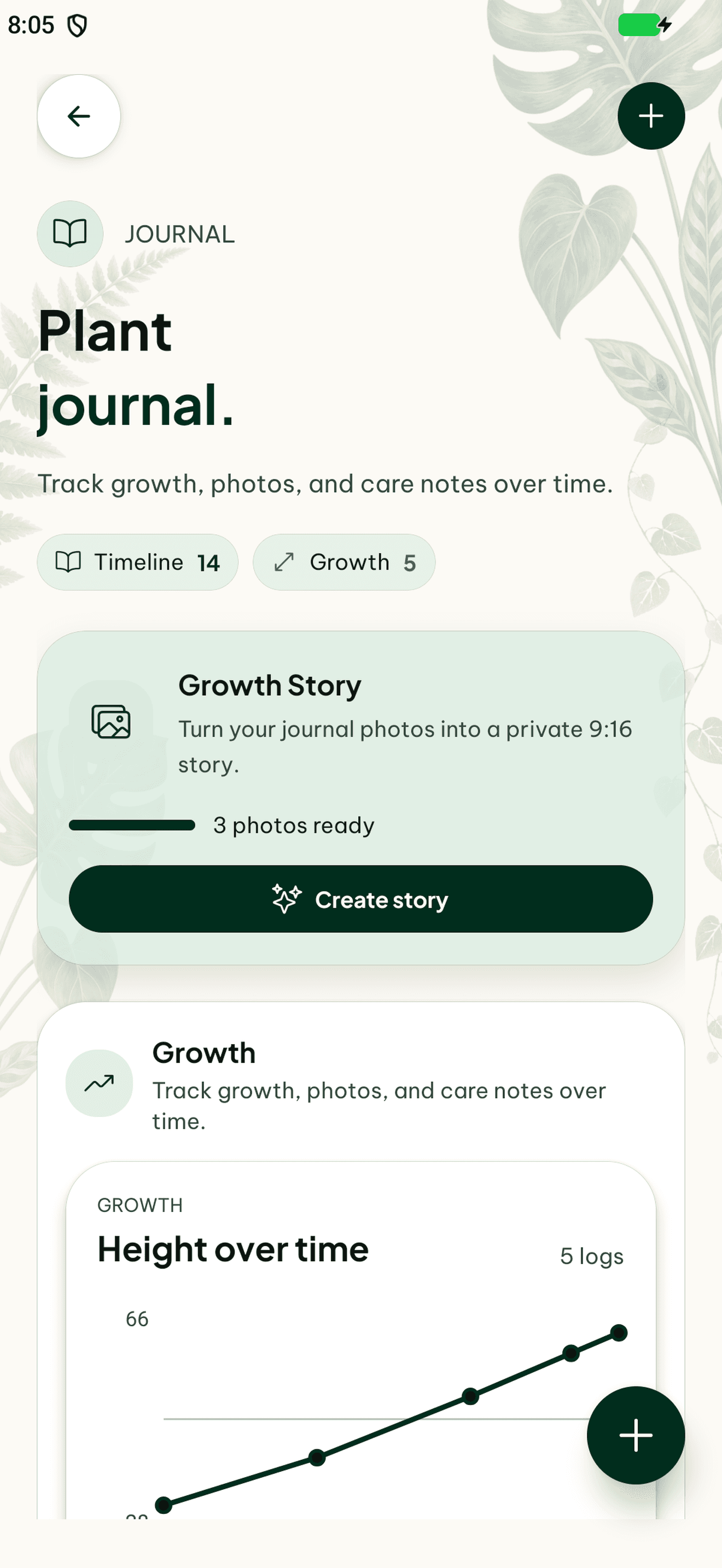

Sources
- NC State Extension: Kalanchoe blossfeldianaplants.ces.ncsu.edu
- University of Wisconsin–Madison Extension: Houseplant carehort.extension.wisc.edu
- Clemson Cooperative Extension: Kalanchoehgic.clemson.edu
- University of New Hampshire Extension: Care of flowering gift plantsextension.unh.edu
- Iowa State University Extension: How do I care for Kalanchoe?yardandgarden.extension.iastate.edu
- ASPCA Poison Control: Kalanchoeaspca.org
Checked on 2 November 2026. This guide does not replace advice for your individual plant.