What houseplant do I have? How to work out its name
In short
The label only says “foliage plant”, and all the pictures online look similar? Look for a full name first, photograph the whole plant and useful details, then compare several features. A photo app offers a suggestion. If features do not match or crucial parts are missing, keep the name provisional until you can get the identification checked by someone qualified.
In this guide
Start with the label, receipt and the plant’s history
Look on the back of the label too, and ask whoever gave you the plant whether they know its original name. Keep any existing label. Common names can vary by region; a full botanical name makes searching more precise.
In Monstera deliciosa, Monstera is the genus, a group of related species. The two words together name the species. An additional name in single quotation marks often denotes a cultivar, a selected cultivated form. Keep these details intact rather than adding a cultivar name yourself based on an uncertain visual resemblance.
Source: New York Botanical Garden: Understanding Plant Labels
Take several views of the same plant
Place the pot against a simple background and use bright, reasonably even daylight. Tap the plant on your phone screen to bring it into focus. A leaf in front of a window should not appear only as a dark silhouette.
Take a picture of the whole plant. Add close-ups of an intact leaf from above and below, plus the point where its stalk joins the stem. Photograph flowers too if present. A ruler beside the plant part gives a sense of scale. Keep other plants out of the frame and show the leaf and its attachment clearly; you do not need to cut anything off.
Source: New York Botanical Garden: Photographing Plants for Identification
Heart-shaped leaves need a closer look
Work from the overall shape to the detail: does the plant climb, do its leaves grow closely around a central point, or are they carried on a firm trunk? Are leaves staggered individually along a stem or arranged in pairs? Does the photo show a whole leaf or just one leaflet of a divided leaf? Shape, edges, surface and attachment all contribute.
Pothos (Epipremnum aureum) and heartleaf philodendron can both have heart-shaped leaves. For Philodendron hederaceum, NC State also describes small sheathing leaves around new growth and leaf stalks without a lengthwise groove as features that distinguish it from pothos. This is why photographing the attachment helps. If these details are missing, keep the identification provisional.
Source: New York Botanical Garden: What Should I Photograph?
Test a suggested name against the actual plant
Look up a suggested name in a plant profile from a botanical institution or university extension service. Compare the description and several photographs with your specimen. If only the leaf color matches while the growth habit and leaf attachment differ, you need more evidence. NC State advises treating photo identifications as provisional until professionally confirmed.
Plantly’s photo identification can suggest a species from a leaf, flower, fruit or bark image. If the suggestion does not fit, photograph another useful part or take a clearer view. Agreement across several features matters more than the first similar-looking result.
Young leaves and older names can cause confusion
A young Monstera deliciosa may not yet have split or perforated leaves. Compare it with photographs of younger plants too. The large, mature leaf shown in a search result is not something to expect at every age.
Two names can also refer to the same species: Kew accepts Dracaena trifasciata and lists Sansevieria trifasciata as a synonym, another botanical name for that species. When names conflict, check a botanical name database too. Finding a synonym does not identify your particular specimen, however. The actual plant species still matters for pruning and choosing a propagation method.
Source: Royal Horticultural Society: How to grow Swiss cheese plants
If you are still unsure, ask with the right pictures
Show a knowledgeable nursery or plant advice service the whole plant, detail photographs and its label. Include where it came from, its size and whether it has flowered. Explain which feature fails to match two possible names. If there is damage, include healthy and affected parts; ask in advance whether the adviser also needs physical plant material.
Wait until the identity is clear enough before a planned major cut or a new propagation method. Our settling-in guide helps with a newly received plant. Then use the lighting and watering guides to match care to its needs. Increasing wilt despite wet potting mix needs prompt attention; our root rot guide explains the warning signs.
Source: Kansas State University Extension: How to submit samples to identify unknown plants
Your checklist
Tick off what you have already checked. Nothing is saved.
Frequently asked questions
Can I identify a houseplant without flowers?
Growth habit, leaves and stems often provide useful clues. Similar species or cultivars may still need additional features. Photograph what is present carefully and leave room for uncertainty where it cannot yet be identified confidently.
What if two apps suggest different names?
Work out which features support each suggestion. Take another picture of the missing or contradictory detail in particular. If the differences remain unclear, take both suggestions and your photographs to a qualified adviser.
Does a photo match prove a plant is non-toxic?
No. A suggested species does not establish edibility or safety for people or animals. Do not use it as a basis for eating a plant or as reassurance after possible ingestion.
Keep photographs and naming clues together
Save dated overview and detail photographs in your Plantly journal. Add a note saying whether the name is still a suggestion and who later confirmed it. The plant’s history, open questions and subsequent care will stay with the right profile.
Explore the related Plantly feature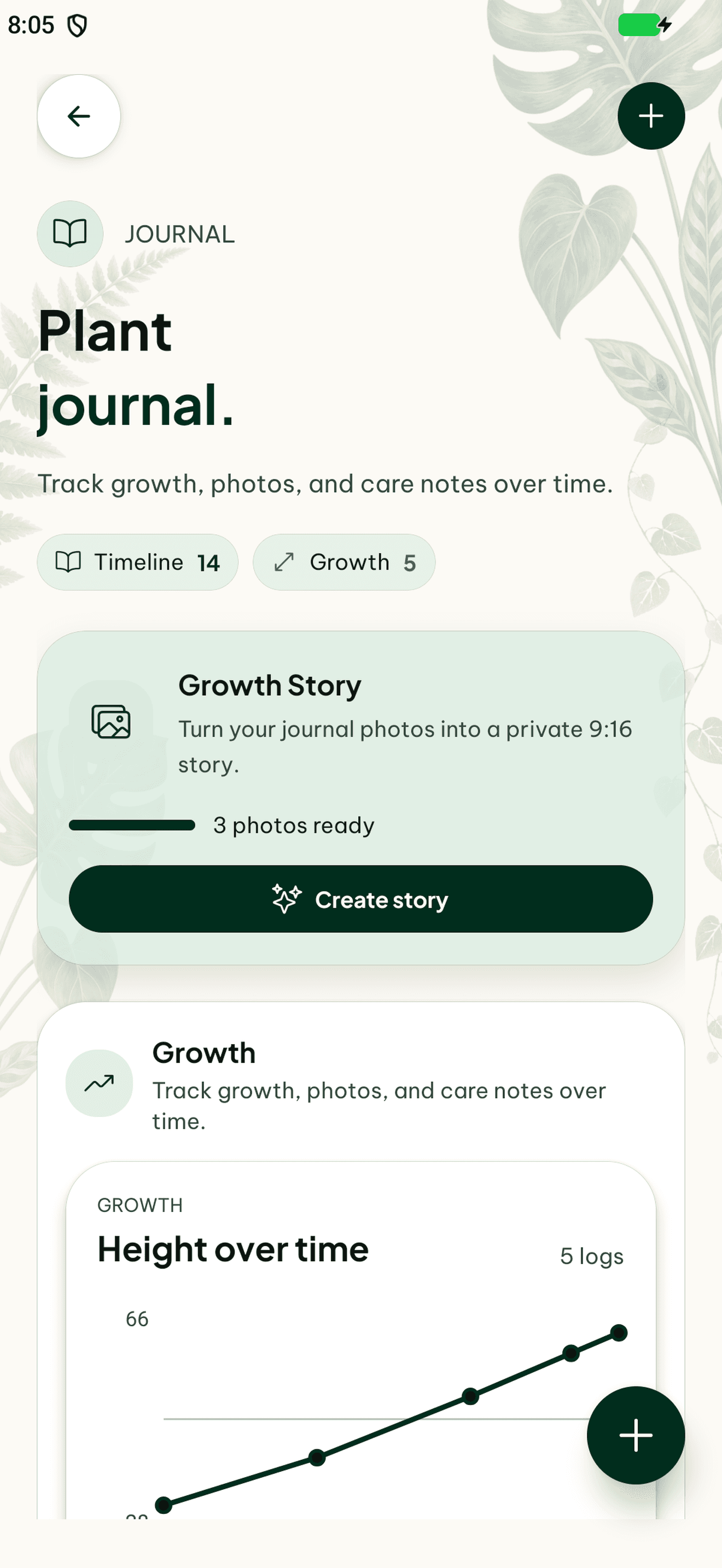

Sources
- New York Botanical Garden: Understanding Plant Labelslibguides.nybg.org
- New York Botanical Garden: Photographing Plants for Identificationlibguides.nybg.org
- New York Botanical Garden: What Should I Photograph?libguides.nybg.org
- NC State Extension: Identify a Plantextensiongardener.ces.ncsu.edu
- Royal Horticultural Society: How to grow Swiss cheese plantsrhs.org.uk
- Kansas State University Extension: How to submit samples to identify unknown plantsextension.k-state.edu
Checked on 9 November 2026. This guide does not replace advice for your individual plant.