Choose a healthy houseplant that suits your space and routine
In short
You like the plant, but will it suit your home? Work out the space and care requirements first. Then compare the actual plants on offer before choosing a pot.
In this guide
Choose the spot first
Where will the plant live? Look at daylight, direct sun and shade from curtains or buildings at that exact spot. A bright room can still have a dark shelf. Notice whether it gets cold at night or receives heat from a radiator.
Compare those conditions with the needs of the plant you have in mind. If you are unsure how to assess the spot, use our light guide before choosing.
Allow for growth and everyday care
Will the windowsill fit only the small nursery pot, or the plant as it grows too? Find out its likely indoor height and spread, and whether it climbs or trails. Measure the available space rather than choosing by its current size alone.
Think about the attention you can give regularly. Ask about moisture needs and any special care. Choose a species whose requirements fit your routine rather than relying on an “easy-care” label.
Source: Tennessee: Selecting Indoor Plants for the Home or Office
Ask for a name you can check
“Foliage plant” is not enough for a precise search. Ask for the botanical name and keep any cultivar details. Common names can mean different things in different regions.
Compare the stated needs with a reliable description of that plant. If its identity is uncertain, our plant identification guide can help. Put off buying if you still cannot tell whether the plant suits your spot.
Source: New York Botanical Garden: Understanding Plant Labels
Compare several plants of the same kind
If possible, compare two or three pots. Turn each gently and look at the back as well. Check for sturdy shoots, the expected leaf colour and good overall condition; a particularly large pot tells you little about quality on its own.
Numerous spots, pronounced wilting or unusually thin growth are reasons to ask questions or choose another specimen. One old crease, however, does not explain the condition of the entire plant.
Source: UMD: Selecting Indoor Plants
Ask before inspecting roots
Ask staff whether they can show you the root ball. Do not pull on shoots or force the plant out. If roots are visible, assess colour and firmness together: brown, soft roots can indicate rot, but colour alone proves neither health nor disease.
A tightly circling root ball shows restricted root space. Discuss the care it needs rather than automatically planning an immediate move into a larger pot. Choose another specimen if roots are soft and disintegrating or there is a clear smell of rot.
Decide from the overall picture
An older yellow leaf or a small dry edge differs from discolouration across much of the plant. Ask whether the damage can be explained and compare it with the remaining growth. Leave that pot behind if extensive damage remains unexplained.
Good condition cannot replace a suitable location: a healthy-looking plant is still a poor choice for a spot without enough light.
Source: RHS: Leaf damage on houseplants
Plan the journey before paying
A tropical plant already showing chilling damage is a poor starting point. Ask about its previous conditions if you are unsure. Once you have chosen your plant, plan a protected journey home.
Our settling-in guide explains what comes after arrival.
Your checklist
Tick off what you have already checked. Nothing is saved.
Frequently asked questions
What should I do with the label?
Photograph both sides. Keep the botanical name and cultivar details without adding uncertain names.
Can I choose a plant from an online shop photo alone?
The photo helps you make a shortlist. Ask whether it shows the actual specimen and request current detail photos if needed. Condition you cannot see remains unchecked.
Is a discounted plant a good buy?
Assess its condition just as carefully as any other plant. A low price tells you neither the cause of damage nor the care it will need.
Compare possible spots with Plantly
Use Plantly’s light check at your intended spot and an alternative. Repeat at other times of day. Phone readings offer guidance and depend on the device; one check cannot describe the full day’s light.
Explore the related Plantly feature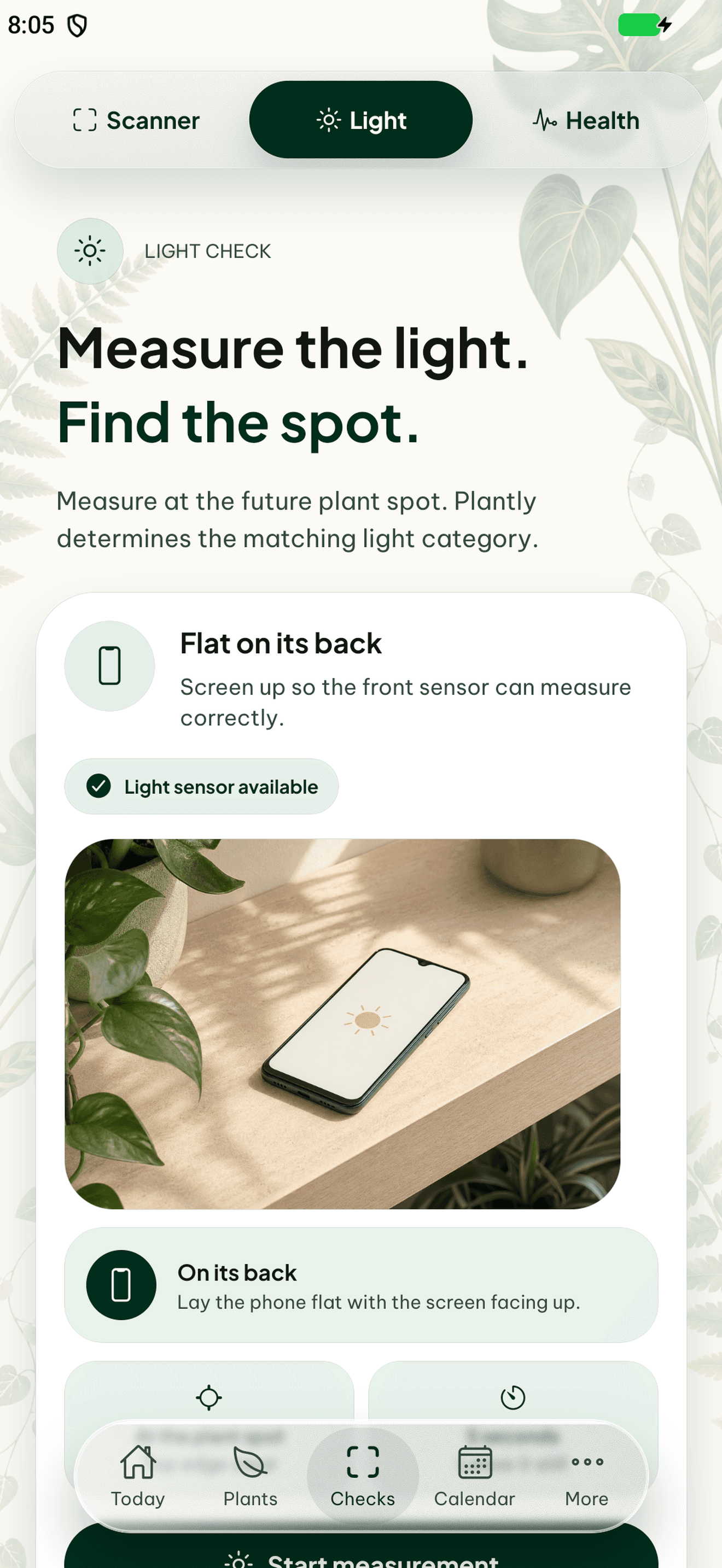
Sources
- RHS: Choosing the best houseplantsrhs.org.uk
- Tennessee: Selecting Indoor Plants for the Home or Officeuthort.tennessee.edu
- New York Botanical Garden: Understanding Plant Labelslibguides.nybg.org
- UMD: Selecting Indoor Plantsextension.umd.edu
- Minnesota: Managing insects on indoor plantsextension.umn.edu
- NC State: Plants Grown in Containerscontent.ces.ncsu.edu
- RHS: Leaf damage on houseplantsrhs.org.uk
- RHS: Buying: garden centre plantsrhs.org.uk
Checked on 12 November 2026. This guide does not replace advice for your individual plant.