Brown spots on houseplants: What to check first
In short
Noticed a few brown spots on otherwise green leaves? Start by checking whether they look dry, raised or wet, and whether more are appearing. Think back to recent changes in the plant's surroundings. If unexplained spots are spreading, separate the plant for now.
In this guide
Look at both sides of the leaf
Look at the whole plant and gently turn over the affected leaves. Is the mark within the leaf tissue, or is something sitting on the surface? Hard water can leave pale mineral deposits. On a firm, smooth leaf, gently test a dry deposit with a soft, damp cloth. Use a leaf-cleaning method that suits your plant.
Lots of tiny pale dots or fine webbing? Check for pests. If it is mainly the tips or edges that are dry, see our guide to brown leaf tips.
Source: University of Maryland Extension · Diagnose Indoor Plant Problems
Has anything changed about its spot?
Has your plant recently moved into direct sunshine? Dry, bleached or brown patches on the exposed side may be sunburn. Move it to a more sheltered but suitably bright spot, and introduce stronger light gradually.
Chilling by a window or droplets of cleaning spray can also leave marks. Check whether the damage fits a recent event. Protect the plant from the cold and keep cleaning sprays away from its leaves.
Source: Royal Horticultural Society · Leaf damage on houseplants
Small, corky bumps? Check the watering needs
Small blisters that turn brown and corky, particularly underneath a leaf, may be edema. It happens when the plant takes up more water than it loses through its leaves. Edema is not contagious. Pest damage can look similar.
Does the root ball stay wet for a long time? Let the potting mix dry according to the plant species' needs before watering again. Improve air movement around the leaves without exposing them to cold drafts.
Source: University of Maryland Extension · Edema of Indoor Plants
Take wet or enlarging spots seriously
Does an enlarging dark spot look water-soaked? Do its edges stop at the leaf veins, making it look angular? These features together can occur with bacterial leaf disease. Dry, rounded spots that enlarge or form rings can occur with leaf diseases too. Shape alone cannot identify the pathogen.
Look for newly affected leaves as well.
Suspect disease? Give the plant some space
For now, move the plant away from the others, somewhere that still suits its needs. Water the potting mix instead of the foliage, and allow air to circulate around the leaves. Skip misting for the time being.
If you suspect disease and only one leaf is badly affected, you can remove and discard it using clean scissors. Clean and disinfect the scissors afterwards and wash your hands. With numerous unexplained spots, don't remove all the leaves as a precaution or start spraying products without knowing the cause.
Compare the spots with new photos
Take a photo of the whole plant and a close-up with a ruler beside the spot. Note the date and relevant changes. Compare the same area later in similar light: has it grown? Are there new spots?
If the damage spreads quickly, keeps progressing despite suitable care, or reaches stems and young leaves too, get expert advice. Photos can help, but they cannot replace a confirmed plant diagnosis.
Source: Iowa State University · Photography (Plant problems)
Your checklist
Tick off what you have already checked. Nothing is saved.
Frequently asked questions
Does a yellow border around a spot always mean fungus?
No. Bacterial leaf disease can also cause a yellow halo around a brown spot. The appearance alone isn't enough for a reliable diagnosis.
Should I cut off a leaf with sunburn?
Not necessarily. A dry, localized patch of damage will stay visible. If the rest of the leaf is still green, you can leave it and watch for new damage.
Give your health check more than a photo
Choose your plant in Plantly and add clear photos, symptoms and recent changes in care to the health check. The suggestions are guidance, not a confirmed diagnosis. Save later observations in the plant journal.
Explore the related Plantly feature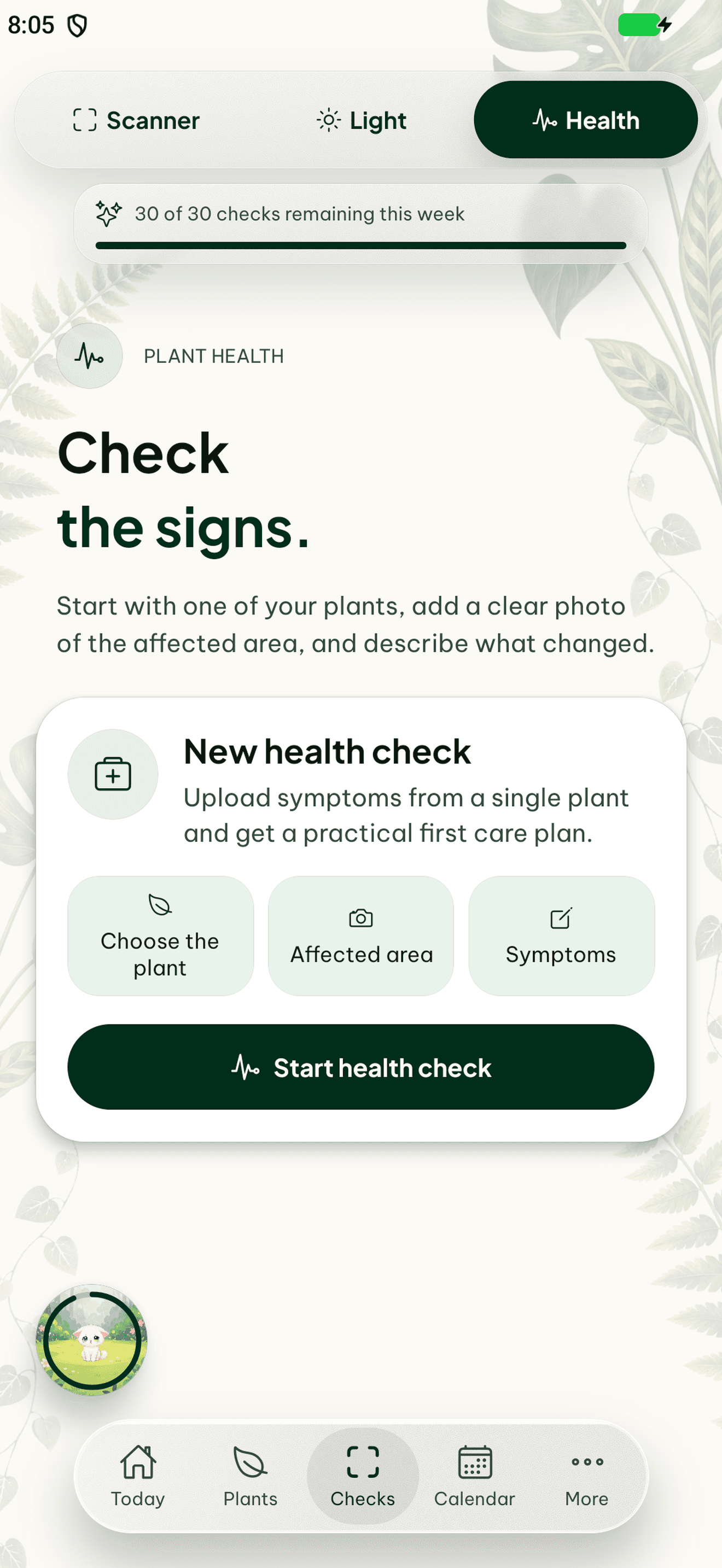
Sources
- University of Maryland Extension · Diagnose Indoor Plant Problemsextension.umd.edu
- Royal Horticultural Society · Leaf damage on houseplantsrhs.org.uk
- University of Maryland Extension · Edema of Indoor Plantsextension.umd.edu
- University of Florida · Diagnosing houseplants 101epi.ufl.edu
- University of California IPM · Houseplant Problemsipm.ucanr.edu
- Iowa State University · Photography (Plant problems)yardandgarden.extension.iastate.edu
Checked on 19 November 2026. This guide does not replace advice for your individual plant.